
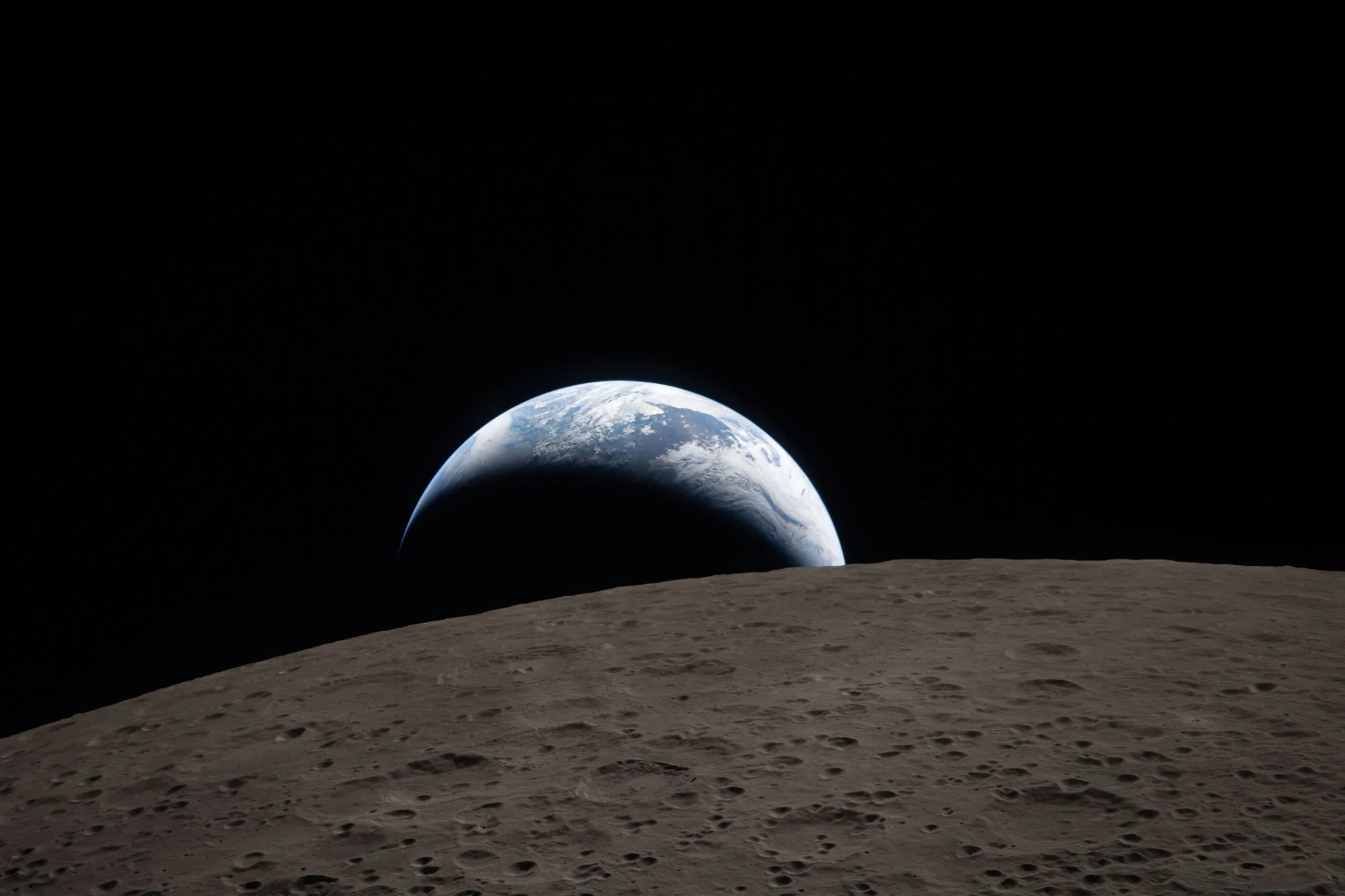
NASA’s Artemis programme has taken another major step forward in humanity’s return to the Moon, with its latest mission successfully completing a crewed lunar flyby and returning safely to Earth in 2026.
The mission, known as Artemis II, did not land on the Moon, but instead carried astronauts around the lunar surface to test deep-space systems, navigation, and crew performance ahead of future landing missions.
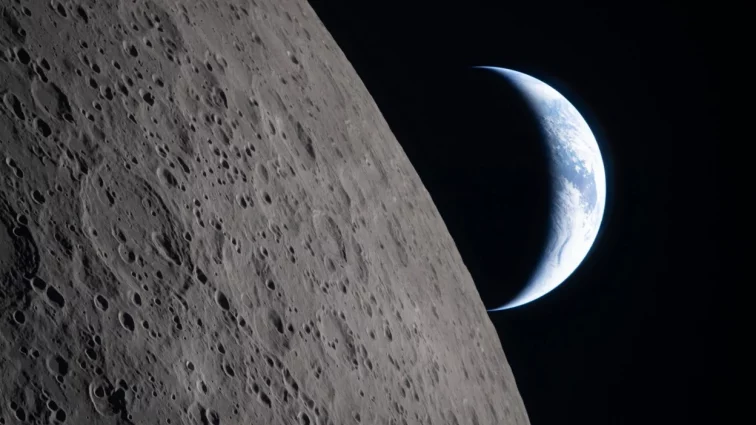
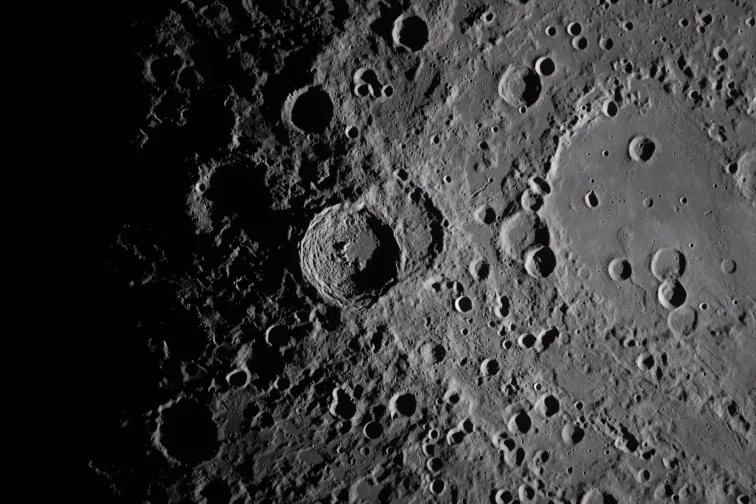
During the journey, astronauts captured some of the most detailed imagery of the Moon in over half a century. This included close observations of the lunar far side, massive impact structures such as the South Pole – Aitken Basin, and high-resolution views of craters and rugged terrain across the surface.
The crew also recorded striking “Earthrise” images, showing Earth appearing as a crescent above the lunar horizon, as seen from deep space.
NASA says the mission provided critical scientific and operational data, including radiation exposure levels beyond Earth’s orbit, communications performance, and real-time coordination between astronauts and ground control.
The Artemis missions themselves have not “discovered” new definitive deposits of water in the sense of confirming large, new reserves, but they have significantly strengthened understanding of where and how lunar water ice is likely to exist – particularly in permanently shadowed craters near the Moon’s south pole, where temperatures are cold enough for ice to remain stable for long periods.
This supports earlier orbital findings that show scattered, patchy water ice mixed with regolith – a layer of loose debris composed of dust, soil, and broken rock – rather than large solid sheets.
In terms of lunar dust (regolith), observations and experiments continue to confirm that it is extremely fine, abrasive, and electrostatically charged, meaning it can cling to surfaces, interfere with equipment, and pose engineering challenges for long-term human presence.
Regarding the far side of the Moon, Artemis flybys and imaging have provided clearer, more comprehensive views of its heavily cratered and ancient terrain, reinforcing that it is geologically different from the near side – thicker crust and a more rugged, heavily impacted surface – offering valuable context for future exploration even though it remains unexplored directly by humans on the ground.
Although Artemis II was not a landing mission, it is seen as a key stepping stone toward future lunar surface exploration, particularly in the Moon’s south polar region, where scientists believe water ice deposits may exist.
The Artemis programme aims to establish a long-term human presence on the Moon in the coming years, and ultimately support future missions to Mars.