
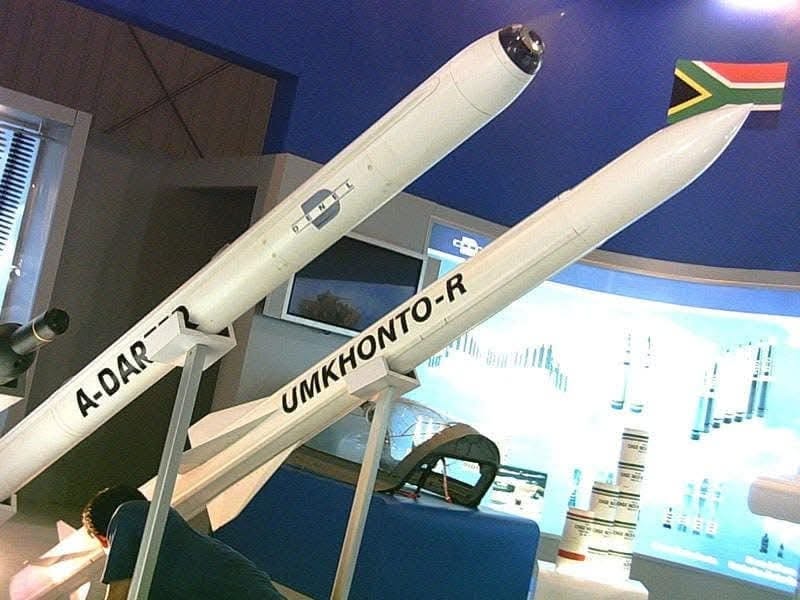
South Africa’s commitment to its foreign policy principles and international legal obligations is set to face renewed scrutiny as the Southern Africa Litigation Centre (SALC) takes legal action against the government over the export of arms to the United States.
The Johannesburg-based human rights organisation has filed an application in the North Gauteng High Court in Pretoria seeking the suspension of permits that allow South African arms exports to the United States. The case centres on whether the National Conventional Arms Control Committee (NCACC) has acted lawfully in continuing to authorise arms transfers to a country that SALC argues has repeatedly violated international law and threatened international peace and security.
According to SALC, South Africa approved more than R279 million worth of arms exports to the United States during 2025. The organisation argues that these approvals were granted despite what it describes as overwhelming evidence of the United States’ involvement in military actions that have attracted accusations of war crimes, aggression and violations of international humanitarian law.
The respondents in the matter include the Chairperson of the NCACC, Minister in the Presidency Khumbudzo Ntshavheni, Defence Minister Angie Motshekga and President Cyril Ramaphosa.
SALC’s challenge is grounded in South Africa’s National Conventional Arms Control Act (NCACA), legislation designed to ensure that the country’s defence exports do not contribute to repression, terrorism, human rights abuses or threats to international peace and security. Under Section 14(3) of the Act, the NCACC is empowered—and in certain circumstances required—to cancel, amend or suspend export permits if doing so is necessary to maintain international peace or prevent repression and terrorism.
Speaking about the application to Radio 786, SALC’s International Justice Cluster Lead, Dr Atilla Kisla, said South Africa already has a progressive legal framework that places strict limitations on arms exports to states with records of violating international law.
“We have domestic law in South Africa and it’s very progressive. It already sets a bar at a very early stage to ensure that South Africa is conducting responsible arms trade, and not delivering arms to a country that has been known for violating international law. That is also a crucial part of our application in this context.”
SALC argues that recent actions by the United States demonstrate a pattern of conduct that should have triggered the NCACC’s obligation to reconsider or suspend arms export permits. The organisation points to Washington’s military involvement in several international conflicts, including its support for Israel’s military operations in Gaza, military strikes against Iran, actions in Lebanon and operations linked to Venezuela. According to the litigation centre, these incidents have resulted in allegations of breaches of international humanitarian law, violations of the United Nations Charter and, in some cases, accusations of complicity in international crimes.
The legal challenge is significant because it is believed to be the first case in South Africa seeking to halt arms exports to a permanent member of the United Nations Security Council on the basis that the recipient state poses a threat to international peace and security.
SALC maintains that South Africa risks undermining its own international standing if it continues exporting military equipment to countries accused of violating international law while simultaneously positioning itself as a champion of human rights and international justice. The organisation has previously criticised South Africa’s arms export practices, arguing that there is often a disconnect between the country’s foreign policy commitments and its defence trade decisions.
At the heart of the case is a broader debate about accountability in the global arms trade. South Africa has frequently advocated for adherence to international law, most notably through its genocide case against Israel at the International Court of Justice. SALC argues that these principles should also guide the country’s export decisions and that legal safeguards contained in domestic legislation must be applied consistently, regardless of the political or economic importance of the recipient state.
The government and the NCACC are expected to oppose the application and defend the legality of the permits. The outcome of the case could have far-reaching implications for South Africa’s defence industry, its international relations and the future interpretation of the National Conventional Arms Control Act.
Should the court find in favour of SALC, it could establish a landmark precedent requiring far greater scrutiny of South African arms exports and strengthening judicial oversight of decisions made by the NCACC. The ruling may also influence how South Africa balances commercial defence interests against its constitutional and international obligations in an increasingly volatile global environment.