
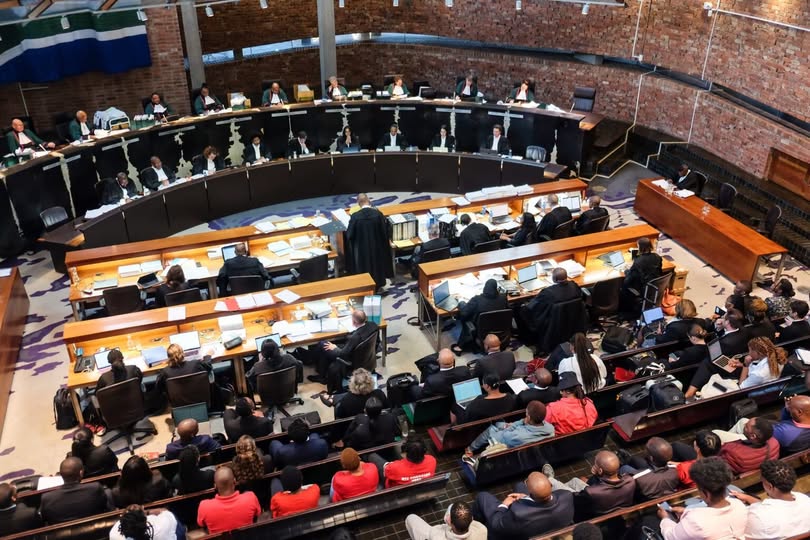
In a landmark judgment more than a decade in the making, the Constitutional Court has ruled that the Western Cape Government and the City of Cape Town failed to meet their constitutional obligations to address apartheid-era spatial inequality through the provision of affordable housing.
In a unanimous judgment delivered by Justice Nonkosi Mhlantla, the country’s highest court set aside an earlier ruling by the Supreme Court of Appeal in the long-running Tafelberg matter, finding that both spheres of government had fallen short of their constitutional duties to promote equitable access to well-located housing.
The court also declared that the Western Cape Government’s sale of the Tafelberg property in Sea Point was unlawful, marking a significant victory for housing activists who have spent more than 10 years challenging the disposal of the site.
A decade-long legal battle
The Tafelberg property, a former provincial school site in the affluent suburb of Sea Point, has long been at the centre of a debate over land reform, affordable housing and the legacy of apartheid spatial planning in Cape Town.
Housing advocacy organisations, including Ndifuna Ukwazi and Reclaim the City, challenged the provincial government’s decision to sell the property to a private developer, arguing that the site should instead have been used for affordable and social housing in one of the city’s most economically vibrant areas.
The case has become one of South Africa’s most significant legal battles over spatial justice, raising broader questions about whether government is doing enough to reverse apartheid-era planning that forced predominantly black and coloured communities to live far from employment opportunities and essential services.
Court finds City failed to tackle spatial injustice
One of the Constitutional Court’s strongest criticisms was directed at the City of Cape Town’s housing policies.
The court found that, at the time court papers were filed, the City had not implemented any social or affordable housing projects in or near Cape Town’s inner city or other major economic nodes in a manner that meaningfully addressed spatial inequality.
Although the City pointed to completed housing developments, the court noted that these projects were largely located in townships or on the urban periphery.
Justice Mhlantla emphasised that proximity to the central business district alone is not enough to remedy apartheid geography.
Instead, the judgment states that meaningful spatial justice requires access to employment opportunities, reliable public transport, schools, healthcare facilities, social amenities and established communities.
The court further found that the City’s housing policies lacked sufficient geographic specificity and unjustifiably excluded well-located, high-opportunity areas such as Sea Point from serious consideration for affordable housing development.
Importantly, the judges rejected the argument that long-term planning documents and proposed future developments were sufficient to meet constitutional obligations.
“The existence of paper plans and incomplete undertakings does not amount to constitutional compliance,” the court effectively held, stressing that constitutional rights require tangible implementation rather than policy commitments alone.
The court also dismissed the City’s reliance on land scarcity and high property values as reasons for not developing affordable housing in affluent areas.
According to the judgment, these conditions are themselves products of apartheid spatial planning and cannot be used to justify continued exclusion.
Western Cape Government also found wanting
The Constitutional Court was equally critical of the Western Cape Government.
It found that the province had failed to justify the lack of affordable housing developments in Cape Town’s inner city and surrounding high-opportunity suburbs, including Sea Point.
While acknowledging the province’s investment in housing projects on the urban periphery, the court ruled that these developments alone do not satisfy the constitutional obligation to progressively realise access to adequate housing.
The judgment found that focusing almost exclusively on peripheral housing developments entrenches rather than dismantles apartheid’s spatial legacy.
The court also rejected the argument that limited financial resources excused the province’s failure to pursue affordable housing in well-located areas.
While budgetary constraints may influence how government prioritises expenditure, Justice Mhlantla said they cannot justify neglecting one constitutional obligation in favour of another.
Where funding is limited, the province has a duty to take reasonable steps to secure additional resources, including seeking financial support from national government where appropriate.
The court further concluded that the province had failed to adopt a coherent and practical strategy for delivering affordable housing in well-located urban areas.
Public participation process declared inadequate
Another significant aspect of the judgment concerns public participation.
The Constitutional Court found that the Western Cape Government failed to conduct a meaningful public participation process before disposing of the Tafelberg property.
This failure, the court held, undermined constitutional principles of transparency, accountability and participatory governance in decisions involving valuable public land.
As a result, the sale of the Tafelberg site was declared unlawful.
Land Administration Act partially invalid
The court also declared sections of the Western Cape Land Administration Act unconstitutional and invalid because they do not adequately provide for meaningful public participation before public land is disposed of.
However, recognising the practical implications of immediately striking down the legislation, the Constitutional Court suspended the declaration of invalidity for 12 months to allow the provincial legislature to amend the law.
Major implications for future housing policy
The judgment is expected to have far-reaching implications for affordable housing policy in Cape Town and potentially across South Africa.
Legal experts say the ruling reinforces that government cannot fulfil its constitutional housing obligations simply by building homes on cheaper land at the outskirts of cities while wealthier, well-located areas remain inaccessible to lower-income residents.
Instead, the decision affirms that spatial transformation must form part of government’s housing strategy and that affordable housing should be integrated into areas close to employment, transport networks and economic opportunities.
For housing advocacy groups, the judgment represents a watershed moment in the struggle to reverse the enduring legacy of apartheid spatial planning.
The ruling places renewed pressure on both the City of Cape Town and the Western Cape Government to develop concrete, implementable plans that deliver affordable housing in well-located urban areas and ensure that valuable public land is used in a manner consistent with constitutional obligations.