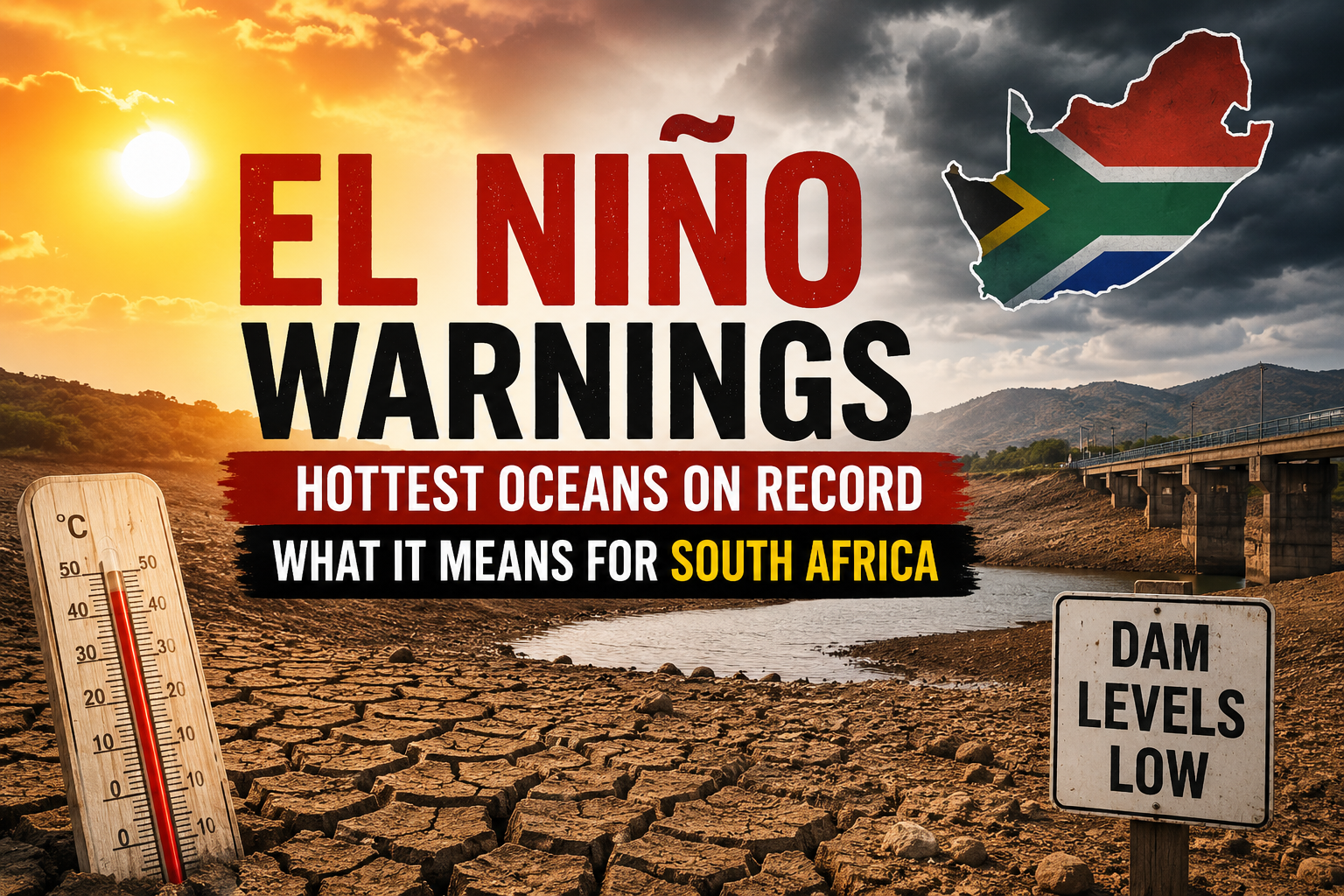
Climate scientists are closely monitoring conditions in the Pacific Ocean amid renewed warnings that another El Niño event could develop, following the hottest ocean temperatures ever recorded globally.
The unprecedented warmth across the world’s oceans has raised concerns that weather extremes could become more frequent and severe, with South Africa among the countries that could experience significant impacts if El Niño conditions strengthen in the coming months.
While meteorological agencies have not yet confirmed the onset of a new El Niño event, experts say persistently warm ocean temperatures have increased the likelihood of climate anomalies that could influence rainfall patterns, agriculture and water security across southern Africa.
Record-breaking ocean temperatures alarm scientists
Global sea surface temperatures have reached record highs over the past year, driven largely by climate change and the lingering effects of the previous El Niño event.
Warmer oceans act as additional fuel for the Earth’s climate system, increasing evaporation, altering atmospheric circulation and contributing to more intense weather events, including heatwaves, droughts, heavy rainfall and tropical cyclones.
Scientists warn that these unusually warm oceans may amplify the impacts of any future El Niño, making weather patterns less predictable.
What is El Niño?
El Niño is a naturally occurring climate phenomenon that develops when sea surface temperatures in the central and eastern equatorial Pacific Ocean become significantly warmer than average.
Although the warming occurs thousands of kilometres away from Africa, it disrupts global atmospheric circulation, influencing weather across much of the world.
The phenomenon typically develops every two to seven years and can last between nine months and two years.
Its counterpart, La Niña, is characterised by cooler-than-average Pacific Ocean temperatures and generally has the opposite effect on global weather patterns.
What does El Niño mean for South Africa?
For South Africa, El Niño has historically been associated with below-average summer rainfall, particularly across the country’s summer rainfall regions.
Provinces including Limpopo, Mpumalanga, Gauteng, North West, the Free State and parts of KwaZulu-Natal are often the most vulnerable to reduced rainfall during El Niño years.
Lower rainfall can lead to:
- Reduced dam levels and pressure on water supplies.
- Poor grazing conditions for livestock.
- Lower crop yields, particularly maize, sunflower and soybean production.
- Increased wildfire risk.
- Hotter-than-normal temperatures across much of the country.
The Western Cape, which receives most of its rainfall during winter, is generally less directly affected by El Niño. However, prolonged dry conditions across the interior can still have broader economic consequences, including higher food prices and increased pressure on national water resources.
Lessons from previous El Niño events
South Africans remain acutely aware of the devastating effects of the strong 2015–2016 El Niño, one of the most severe on record.
That event contributed to widespread drought across southern Africa, leading to crop failures, livestock losses and severe water shortages. Several municipalities imposed strict water restrictions, while the agricultural sector suffered billions of rand in losses.
The drought also contributed to rising food inflation as staple crops became scarcer.
Climate scientists caution that no two El Niño events are identical, but the previous event illustrates the potential consequences should another strong episode develop.
Agriculture on high alert
South Africa’s agricultural sector is already watching developments closely.
Farmers rely heavily on seasonal rainfall forecasts when deciding what crops to plant and when to begin planting. Any indication of a developing El Niño could influence planting decisions, irrigation planning and livestock management.
Agricultural economists warn that reduced rainfall during the upcoming summer growing season could affect maize production, with knock-on effects for food prices throughout the region.
Southern Africa is particularly vulnerable because several neighbouring countries depend on South Africa for grain exports during years of poor harvests.
Climate change adding to the risk
Scientists emphasise that while El Niño is a natural climate cycle, human-induced climate change is making its impacts more severe.
Global warming has increased ocean temperatures, meaning El Niño events are now occurring in a warmer climate than in previous decades. This can intensify heatwaves, increase evaporation and worsen drought conditions.
At the same time, warmer oceans also provide more energy for extreme rainfall events in regions where heavy precipitation occurs, increasing the risk of flooding.
South African Weather Service monitoring developments
The South African Weather Service (SAWS) continues to monitor ocean and atmospheric conditions alongside international forecasting agencies.
Forecasters stress that seasonal outlooks are probabilistic rather than deterministic. While El Niño increases the likelihood of below-normal rainfall over parts of South Africa, it does not mean every region will experience drought, nor does it guarantee dry conditions throughout the season.
Meteorologists expect further updates over the coming months as Pacific Ocean conditions become clearer ahead of the country’s summer rainfall season.
Preparing for a changing climate
Experts say governments, municipalities, farmers and businesses should continue investing in climate resilience regardless of whether a formal El Niño develops.
Improved water conservation, drought preparedness, climate-smart agriculture and better seasonal forecasting are increasingly viewed as essential as global temperatures continue to rise.
With the world’s oceans recording unprecedented levels of warmth, scientists warn that climate extremes are becoming more likely, underscoring the need for South Africa to prepare for a future in which both droughts and floods may become more frequent and more intense.