The Palestine Solidarity Campaign has framed its legal battle with Cape Union Mart as a fight to defend South Africans’ constitutional right to protest, speak freely, and participate in consumer boycotts.
This comes as retail chain Cape Union Mart and its executive chairman, Philip Krawitz, have approached the Western Cape High Court seeking a final interdict against the PSC and associated activists. The company wants the court to stop campaigners from labelling Cape Union Mart and Krawitz as supporters of genocide, or from making claims that the company is linked to Israel’s assault on Gaza.
The matter is being heard before a full bench of the High Court this week.
At the centre of the dispute is a long-running boycott campaign led by pro-Palestine activists, who have staged weekly demonstrations outside Cape Union Mart stores. The PSC and other solidarity groups allege that the brand and Krawitz are associated with the Israeli state and have called on consumers to boycott the company.
Cape Union Mart, however, argues that the claims are defamatory and damaging. In its court application, the company says remarks suggesting that it supports or funds genocide in Gaza have caused reputational harm and economic losses. It wants the court to grant relief that would prevent activists from continuing with these claims.
For the PSC, the case is about more than one retailer. The organisation says it is about whether civil society movements can publicly criticise companies, call for boycotts, and use protest action as a form of political expression.
South Africa’s Constitution protects freedom of expression, freedom of assembly, and the right to protest peacefully. These rights have historically been central to anti-apartheid activism and remain important tools for social justice movements, including those campaigning against Israel’s occupation of Palestine and the ongoing war in Gaza.
The PSC argues that boycott campaigns are a legitimate and peaceful form of protest. Supporters say consumer pressure has long been used to challenge injustice, from apartheid South Africa to global campaigns against companies accused of benefiting from war, occupation, or human rights abuses.
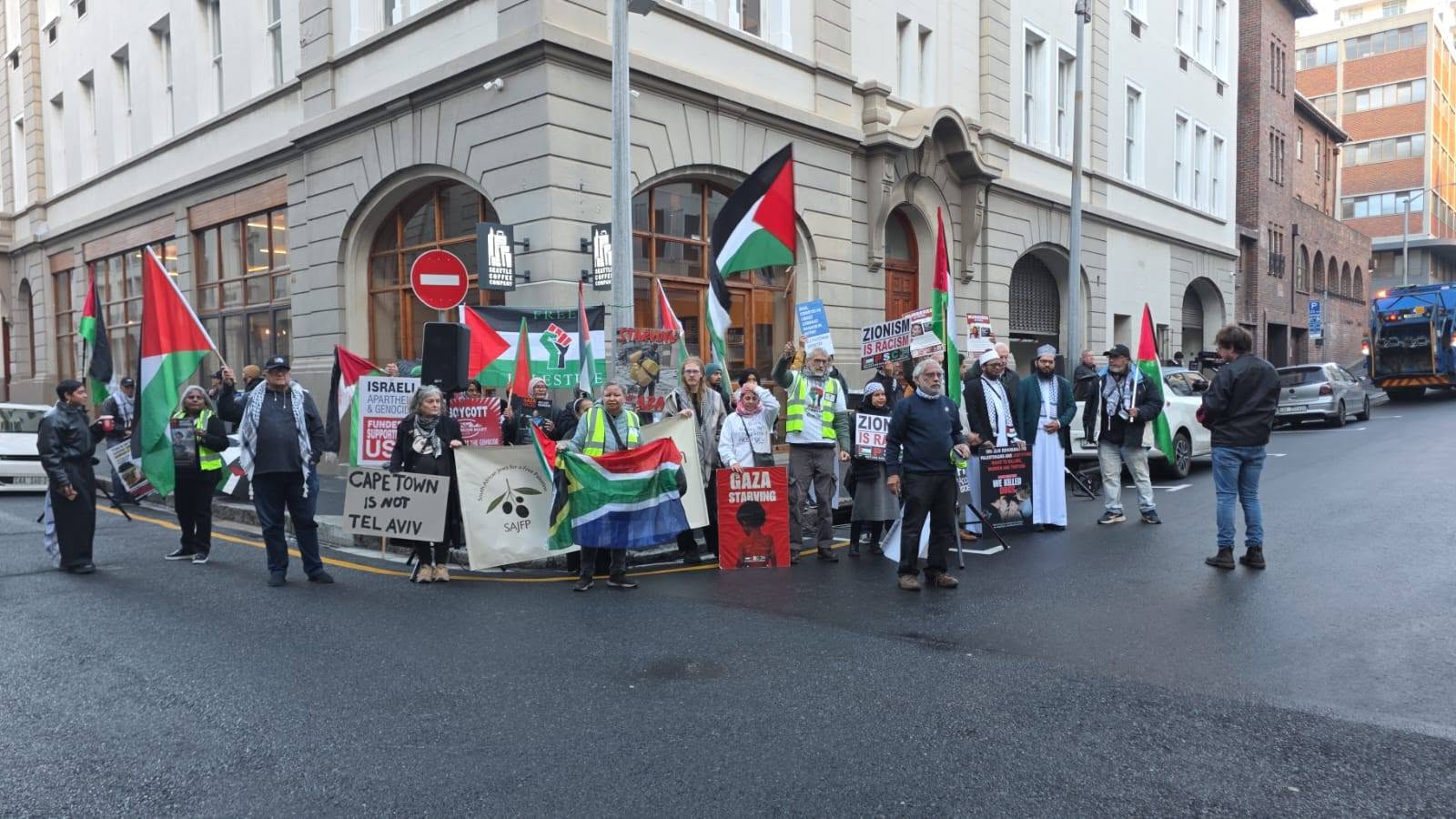
Outside the court, pro-Palestine supporters gathered in solidarity with the PSC, insisting that Cape Union Mart cannot “muzzle” activists. Demonstrators said the case was an attempt to silence criticism and weaken the growing boycott movement. Many carried Palestinian flags and placards affirming that “boycotts work”.
A counter-gathering by pro-Israel supporters is also being held outside court, reflecting the deep divisions the case has exposed within South African society.
The legal battle comes amid heightened public outrage over Israel’s military campaign in Gaza, which has drawn widespread condemnation from human rights organisations, governments, and solidarity movements around the world. South Africa has also taken a prominent international stance on the issue, including through its genocide case against Israel at the International Court of Justice.
Locally, the Gaza war has intensified activism, with South African civil society groups placing pressure on companies, institutions, and public figures accused of maintaining ties with Israel. These campaigns have included marches, store pickets, petitions, and calls for economic boycotts.
Cape Union Mart’s application now places the courts at the centre of a broader debate: where does protected political speech end, and where does unlawful defamation begin?
The outcome of the case could have wider implications for protest movements, corporate accountability campaigns, and the limits of public criticism in South Africa.
For now, the PSC says it will continue to defend what it views as a fundamental democratic right: the right of ordinary citizens to protest injustice and call for economic action against those they believe are complicit in oppression.
The court is expected to hear arguments before deciding whether to grant the final interdict.