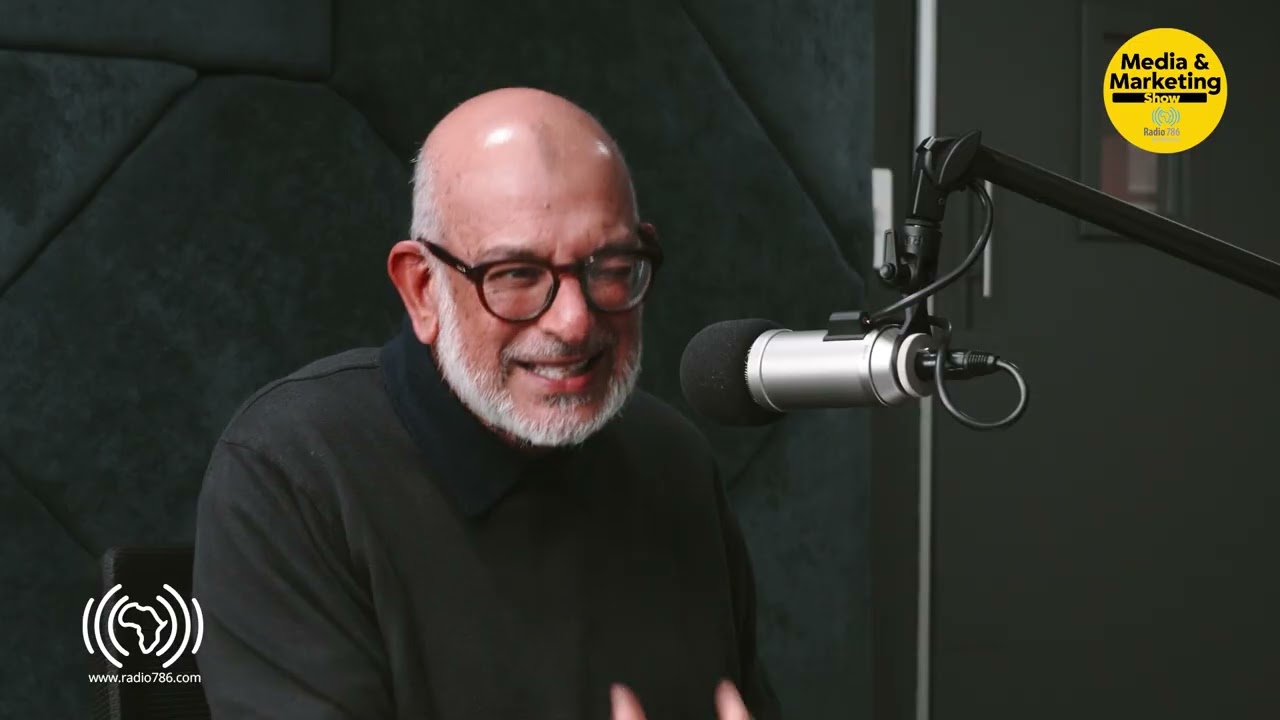
In this discussion, host Hasanain Abdullah sits down with veteran journalist, Farid Sayed who shares his rich career industry experiences.
Farid Sayed by way of introduction:
He started his reporting when a typewriter was a weapon and a banning order was a badge of honour. At Muslim News, he started out as a trainee journalist, evolved to the senior reporter and to an editor until his banning in 1986. As the founding editor as Muslim Views, he has seen the publication adapt his content to an online audience as part of an effort to consider how its readers consume the news.
He is no stranger to radio, he hosted NRA (News Reviews) from 2006 – 2011 on Radio 786.
The discussion touched on the following:
The secret sauce to longevity
As the editor of Muslim Views, Farid Sayed has outlived global recessions, a pandemic, the rumbles of world wars. The discussion touched on secret formula for the publication who has managed staying relevant when so many legacy titles have ceased to exist.
Technological Tsunami
The discussion also touched on how the publication has been able to adapt their publication to an audience who consume the news by using their smartphone.
Social Justice vs Content Consumption for the moment
The legacy of Colonialism, Apartheid, land and economic justice, these are deep stories. Digital media requires quick shareable content. We posed a question to find out how the publication strike the balance between publishing well researched content as well as keeping up with the content cycle and making content readily available.
Editorial independence
The question of independence was raised, in the view of advertisers who may potentially pose a threat to the independence of the publication.
Starting under the height of Apartheid
Farid started his journalist career in the Muslim News newsroom in September 1975, during the height of the student resistance under the prolific James Matthews.
The apartheid police state was fully in sync, the was a suppression of reporting that questioned the state and its legislation that promoted separate development and violence against people of colour. Farid gave an account of what he witnessed and experience on the ground while covering the 1970’s resistance to Apartheid, these included the student uprising.
Banning orders
When Muslim News was banned in 1986 and Grassroots got closure orders, during the state of emergency. Farid shared an account of how this challenging period was navigated and how the publication was reinvented from Muslim News to Muslim Views.