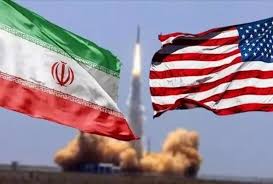
TEHRAN – Iran’s Supreme National Security Council (SNSC) has announced that a memorandum of understanding (MoU) aimed at ending the war between Iran and the United States has been finalised, marking what could become one of the most significant diplomatic breakthroughs in the Middle East in recent years.
In a statement addressed to the Iranian people, the council said the agreement followed months of “arduous and intensive negotiations” between Tehran and Washington and would result in the immediate and permanent cessation of military operations on all fronts, including Lebanon. The agreement is expected to be formally signed on Friday 19 June in Switzerland.
The announcement also states that the naval blockade imposed on Iran will be lifted immediately, a move that could have major implications for international trade and global energy markets. Iran’s leadership thanked Pakistan and Qatar for their roles in facilitating the negotiations, highlighting the importance of regional mediation efforts in bringing the parties to the table.
The agreement follows more than three months of conflict that heightened tensions across the Middle East, disrupted shipping routes, and raised fears of a broader regional war involving multiple state and non-state actors. The fighting affected not only Iran and the United States but also extended into Lebanon, where hostilities involving Hezbollah and Israel contributed to growing instability.
The Strait of Hormuz, through which a significant portion of the world’s oil supply passes, became a focal point of the conflict. Concerns over disruptions to shipping contributed to volatility in global energy markets and increased pressure on world leaders to find a diplomatic solution.
The reported lifting of the naval blockade and the reopening of key maritime routes are likely to be welcomed by energy-importing nations and global markets that have been closely monitoring developments in the Gulf region.
Iran Frames Agreement as Strategic Victory
In its statement, the SNSC said the agreement was a victory for the Islamic Republic, asserting that Iran had established its superiority in confronting what it described as the “American-Israeli enemy.”
The council further indicated that negotiations toward a comprehensive final settlement would only resume once the other party has fulfilled its obligations under the memorandum, underscoring the deep mistrust that continues to characterise relations between Tehran and Washington.
Despite the optimism surrounding the announcement, analysts caution that the memorandum represents a framework agreement rather than a final peace settlement. Several contentious issues remain unresolved, including Iran’s nuclear programme, sanctions relief, regional arrangements over the Strait of Hormuz.
Reports indicate that a further phase of negotiations will focus on these issues, with implementation and verification mechanisms likely to become central points of discussion. Questions also remain about how regional actors, particularly Zionist-Israel, will respond to aspects of the agreement involving Lebanon and broader security in the region.
The agreement is being viewed as a potentially major de-escalation in a region that has experienced years of conflict, proxy wars, sanctions, and diplomatic standoffs.
Should the memorandum hold and lead to a lasting settlement, it could reduce tensions across West Asia, improve maritime security in one of the world’s most strategically important waterways, and ease concerns over energy supplies and global economic stability.
For now, attention turns to the planned signing ceremony on 19 June and whether both sides will implement the commitments outlined in the memorandum. While significant hurdles remain, the announcement represents the clearest indication yet that Tehran and Washington may be moving away from military confrontation and towards a negotiated political settlement.