In Cape Town, the arrival of Eid is marked by a deeply rooted and visually striking tradition: the communal sighting of the new moon along the Atlantic Seaboard. Each year, as Ramadan draws to a close, families and community members gather at Sea Point Promenade to look toward the horizon in anticipation of the Shawwal crescent. The atmosphere is both festive and reverent – children scan the skies with excitement while elders recall years of sightings past. When the moon is finally spotted, the announcement spreads quickly, often followed by takbirs (chants of “Allahu Akbar”), confirming that Eid has begun.
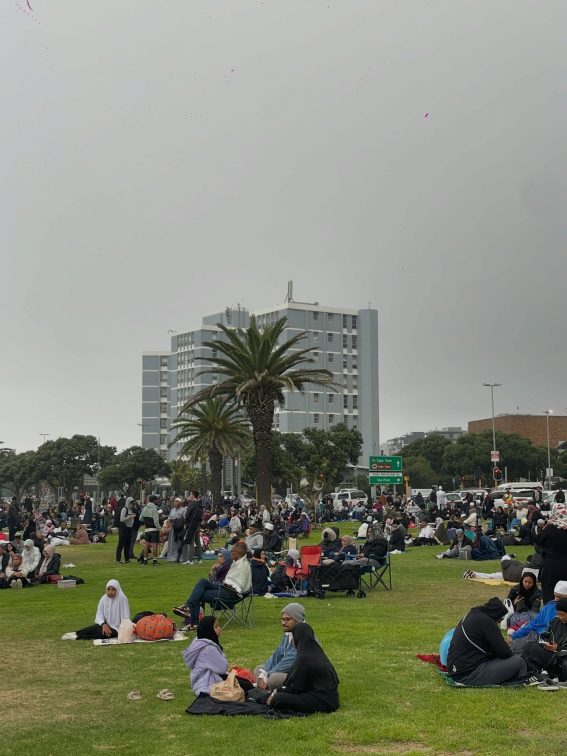
This practice is not merely cultural – it is rooted in Islamic jurisprudence. The majority of scholars across the main schools of thought maintain that the start of months such as Shawwal should be determined by physical moon sighting with the naked eye, rather than relying solely on astronomical calculations. This position is based on well-known hadith of the Prophet Muhammad, who said:
“Fast when you see it (the crescent) and break your fast when you see it; if it is obscured, then complete thirty days.”
This narration, recorded in collections such as Sahih al-Bukhari and Sahih Muslim, forms the foundation for the traditional approach followed by many Muslim communities worldwide, including in South Africa.
In line with this method, and due to expected moon visibility conditions, Eid Al Fitr in South Africa is anticipated to be observed on Saturday, March 21, 2026. Other countries likely to celebrate Eid on Saturday include India, Pakistan, and Bangladesh, where local moon sightings often determine the final date. Despite differences in timing, the spirit of Eid remains universal – a celebration of faith, gratitude, and community.
This Eid comes in the wake of a a war in East Asia as Iran defends against an American-Israeli onslaught where many Muslim families are having to bury children, mothers and fathers alike.
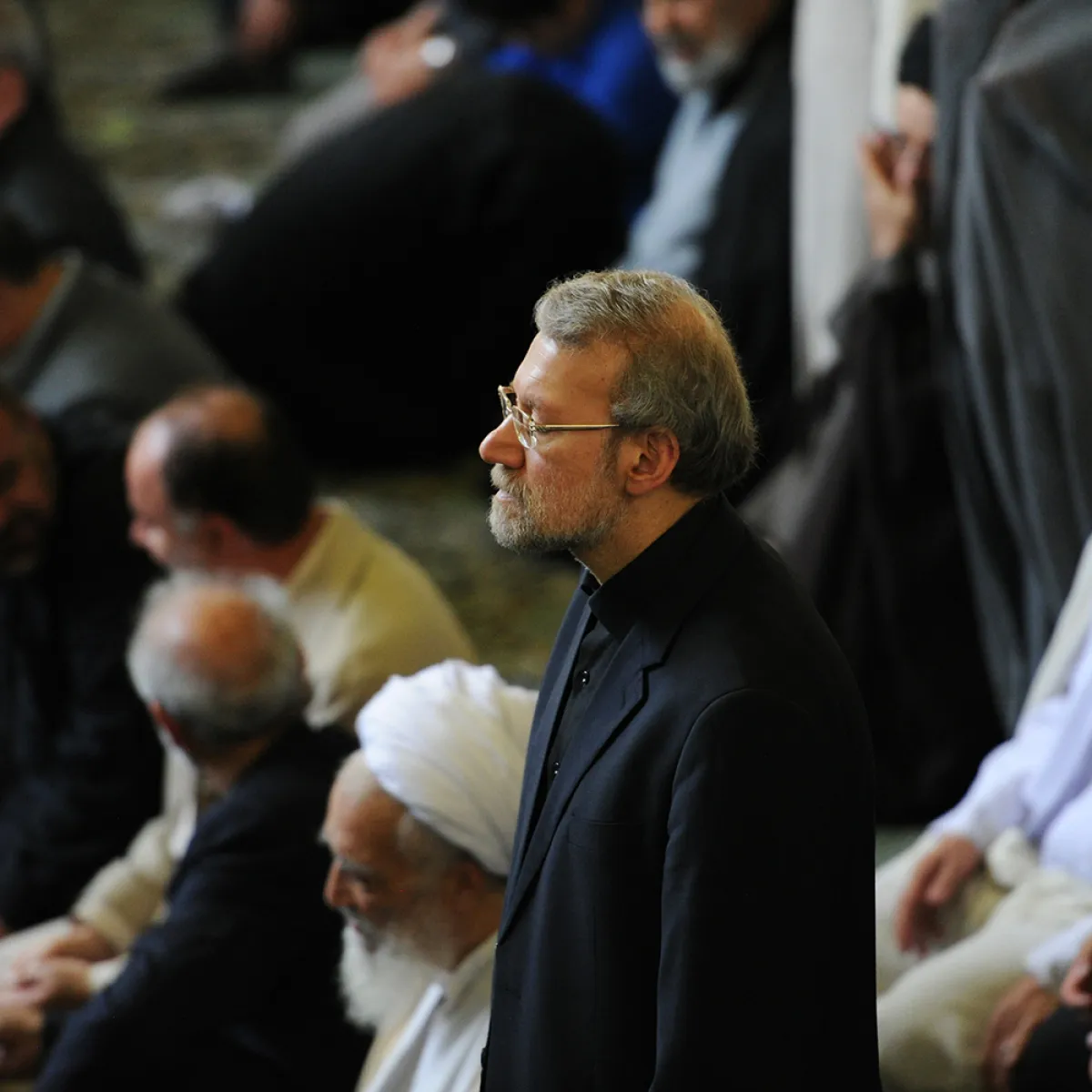
The martyred Secretary of Iran’s Supreme National Security Council, Ali Larijani, recently issued a message to the Islamic world urging Muslim nations to unite for the sake of security, progress, and independence, while sharply criticizing governments that have not supported Iran.
He accused some countries of effectively siding with the United States and Israel, framing this as a betrayal of Islamic solidarity, and called on leaders to clearly choose between Iran and its allies or their adversaries. He invoked the duty of Muslims to respond to one another in times of need, warning that continued disunity would weaken the entire Islamic world and endanger its future.
Recent Israeli attacks on Lebanon have intensified sharply, with heavy airstrikes and ground operations concentrated in the south and Beirut’s southern suburbs, destroying homes, infrastructure, and even hitting areas where displaced civilians had sought refuge. Since early March 2026 alone, hundreds of people have been killed and entire residential buildings flattened, raising serious humanitarian concerns .
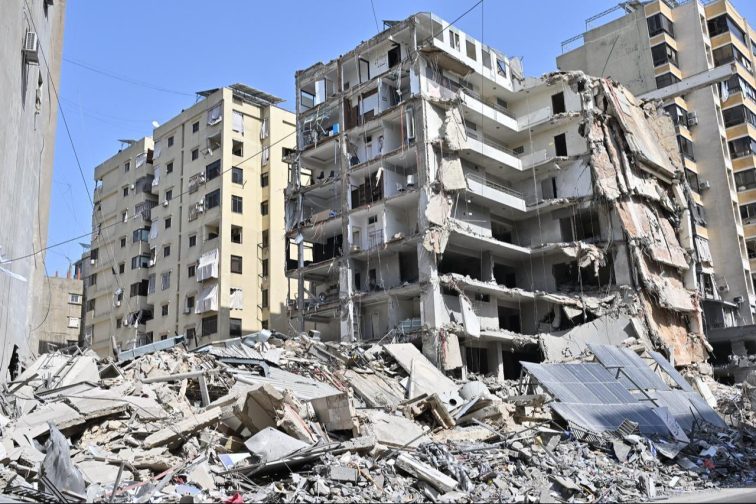
The violence has triggered mass displacement, with more than one million Lebanese forced from their homes, many fleeing from southern Lebanon toward Beirut and other areas . The Zionist regime has indicated that displaced residents may not be allowed to return to the south until security conditions are met, reinforcing fears that the region is being effectively emptied or isolated . Many parallels are being drawn to the Nakba of the Palestinians.
At the same time, some Israeli political figures have made statements comparing the potential destruction in parts of Lebanon to Gaza – particularly areas like Khan Younis – fueling concerns that southern Lebanon could face a similar level of devastation and long-term displacement.
Meanwhile, the Lebanese resistance group, Hezbollah, has recently demonstrated a series of successful military hits against Israel. The tactical successes include sustained rocket fire, drone, and missile attacks on northern and central Israeli targets. Since early March 2026, the group has launched large barrages of rockets targeting the occupied lands, their military bases, and infrastructure, with some strikes inflicting significant damage. Hezbollah has also used anti-tank missiles and cross-border attacks that reportedly hit Israeli armored vehicles and positions near the border. In addition, it has claimed strikes on key Israeli military sites such as airbases and surveillance installations, while continuing to maintain operational capacity in southern Lebanon despite heavy Israeli bombardment . Overall, while facing intense retaliation, Hezbollah has shown it can still launch coordinated attacks and inflict limited but notable military and strategic pressure on Israel.
The picture remains grim in Gaza as a humanitarian crises continues to worsen in the midst of Israeli genocide, compounded by routine Israeli violations of the so-called ceasefire. In the West Bank and Jerusalem in particular, Palestinians continue to be barred from Masjidul al-Aqsa and Christians would likely be denied the right to gather ahead of the marking of Easter.