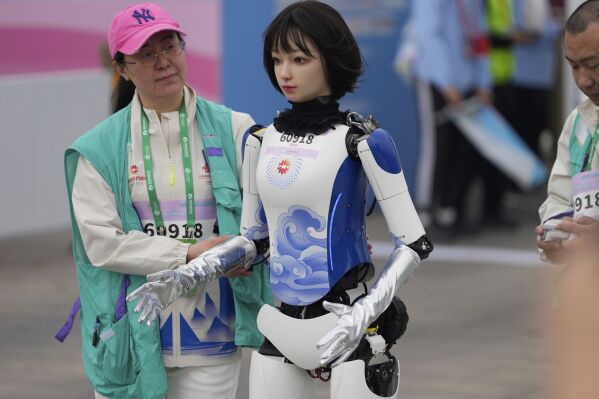
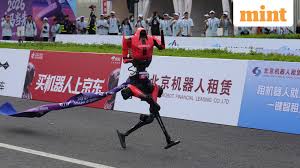
In a development that sounds like science fiction brought to life, a Chinese humanoid robot has made global headlines after winning a half-marathon race in Beijing, outperforming not only other robots, but also surpassing the best human record ever achieved over the same distance.
The robot, named “Lightning”, was developed by the Chinese technology company Honor. It completed the 21.1-kilometre race in an astonishing 50 minutes and 26 seconds, beating the human half-marathon world record of 57 minutes and 20 seconds.
The race formed part of the 2026 Beijing E-Town Humanoid Robot Half-Marathon, an event designed to test the real-world capabilities of advanced robotics. More than 100 robot teams participated alongside around 12,000 human runners, although the robots ran on a separate course for safety reasons.
A Leap Forward in Robotics
What makes this achievement particularly remarkable is the rapid pace of progress. Just a year earlier, the fastest robot in the same competition took more than two hours and forty minutes to complete the course.
This dramatic improvement highlights how quickly robotics technology is evolving. Many of the competing machines used advanced features such as human-like leg mechanics, AI-driven navigation, and even liquid cooling systems adapted from smartphone technology to prevent overheating during long-distance running.
Nearly half of the robots in the race were able to run autonomously, without human control – an important milestone in artificial intelligence and machine independence.
Not Without Challenges
Despite the headline-grabbing victory, the event was not without its hiccups. Several robots stumbled at the starting line, collided with barriers, or shut down mid-race. Engineers followed along the route, ready to assist malfunctioning machines.
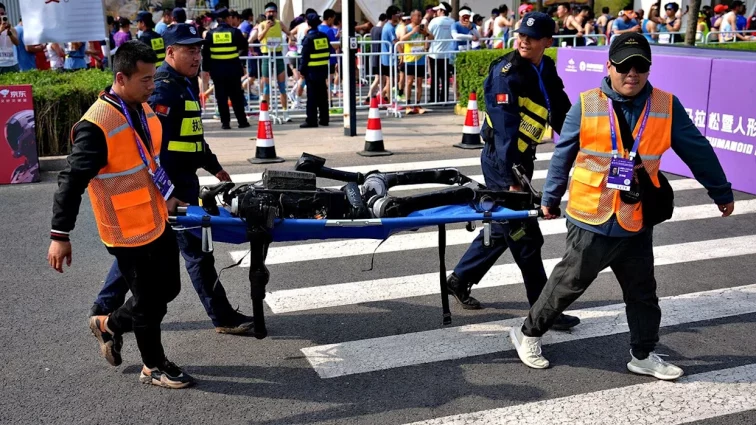
These moments served as a reminder that, while the technology is advancing rapidly, it is still a work in progress—particularly in areas like balance, perception, and decision-making in dynamic environments.
Why It Matters
Beyond the spectacle, the race is part of China’s broader strategy to position itself as a global leader in robotics and artificial intelligence. Events like this are intended not only to showcase innovation but also to accelerate the transition of robots from controlled lab environments into real-world applications.
Experts suggest that such advancements could have far-reaching implications, from industrial automation to emergency response in hazardous environments.
A Glimpse of the Future
The image of a humanoid robot outrunning elite human athletes is both impressive and unsettling. While robots are not yet replacing humans in sport, their performance raises deeper questions about the future relationship between humans and machines.
For now, the victory of “Lightning” stands as a powerful symbol of technological progress – one that suggests the gap between human and machine capability is narrowing faster than many expected.