
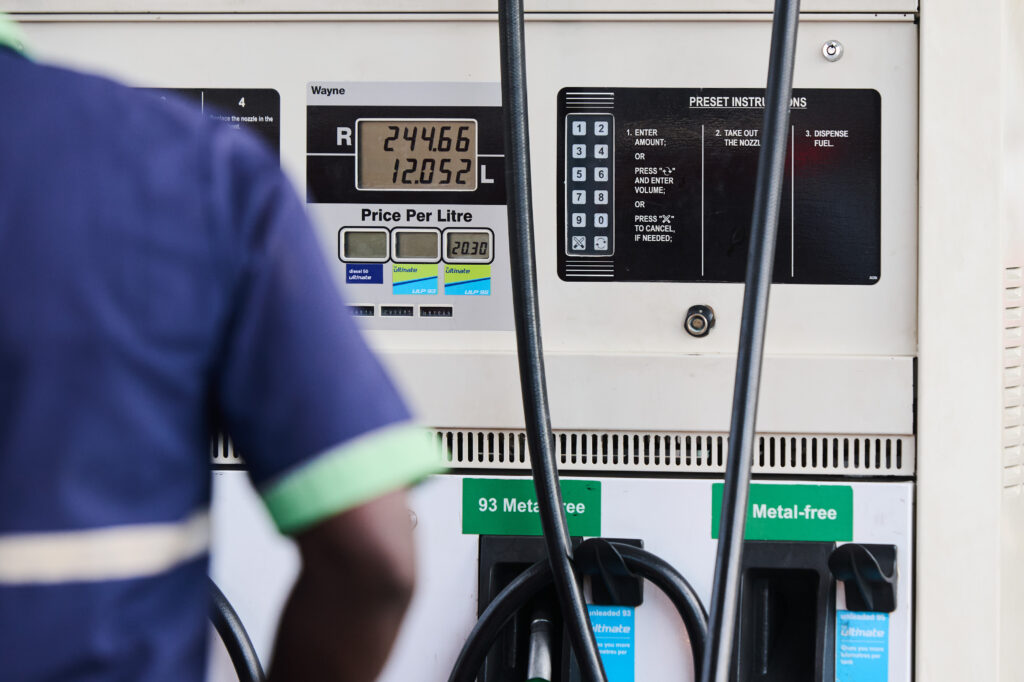
South African motorists will receive significant relief at the pumps from Wednesday as substantial reductions in the prices of petrol, diesel and illuminating paraffin come into effect, following lower international oil prices and a stronger rand.
The Department of Mineral and Petroleum Resources announced that both grades of petrol, diesel and paraffin will all decrease, while liquefied petroleum gas (LPG) will see a slight increase.
Under the latest adjustments, the price of petrol will decrease by between R1.96 and R2.01 per litre, depending on the grade. Diesel users will benefit even more, with wholesale prices falling by between R3.13 and R3.58 per litre.
Households that rely on illuminating paraffin for cooking, heating and lighting will also see considerable savings, with the single maximum retail price dropping by nearly R7 per litre. By contrast, the maximum retail price of LPG will increase by 16 cents per kilogram, while consumers in the Western Cape will pay an increase of 19 cents per kilogram.
The Department attributed the favourable price adjustments primarily to a sustained decline in international crude oil prices. During the fuel price review period, the average price of Brent crude oil fell from around US$104 per barrel to approximately US$86 per barrel, easing the cost of importing refined petroleum products.
Officials also noted that the South African rand strengthened against the US dollar during the same period. Because South Africa imports both crude oil and refined fuel products, a stronger rand reduces the cost of these imports, helping to lower domestic fuel prices.
The decline follows weeks of volatility in global energy markets that had been driven by heightened tensions in the Middle East, particularly surrounding the conflict involving Iran, Israel and the United States. Concerns that the conflict could disrupt oil supplies through the strategically important Strait of Hormuz had pushed crude oil prices sharply higher in June.
However, markets stabilised after diplomatic efforts and a memorandum of understanding between Iran and the United States helped ease fears of an immediate escalation, allowing oil prices to retreat from recent highs. The easing of geopolitical tensions, coupled with expectations of stable global supply, contributed to the lower Brent crude prices reflected in the latest fuel price calculations.
The latest adjustments are expected to provide some relief to consumers and businesses facing persistent cost-of-living pressures. Lower fuel prices often have a broader impact on the economy by reducing transport and logistics costs, which can help moderate the prices of goods transported by road, including food and other essential products.
Economists have cautioned, however, that while the reductions are welcome, future fuel prices will continue to depend on international oil market movements, exchange rate fluctuations and geopolitical developments that influence global energy supply. For now, the latest cuts represent one of the most significant decreases in fuel prices in recent months, offering welcome relief for motorists, freight operators and households across South Africa.