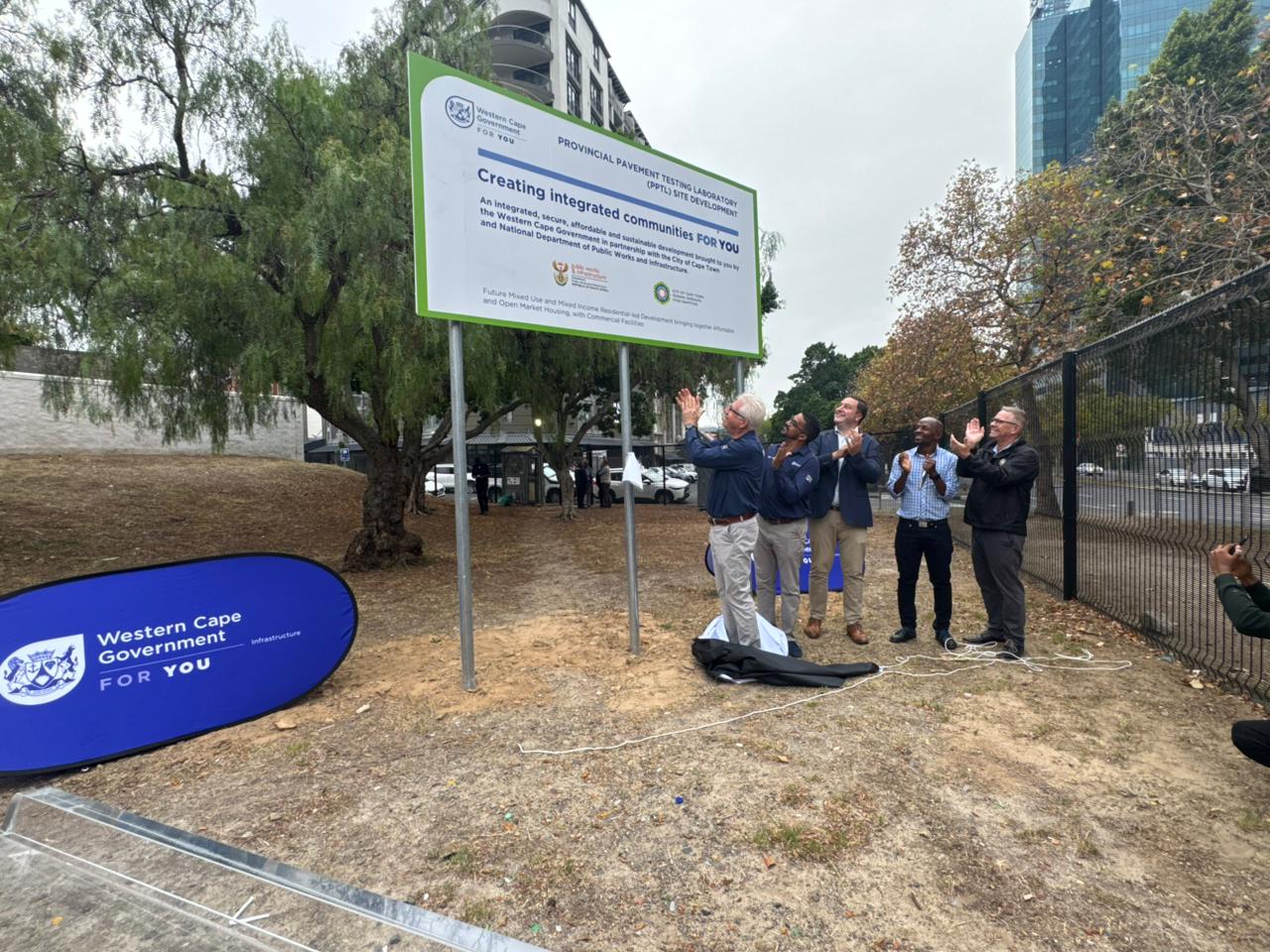
The City of Cape Town and Western Cape government have unveiled the third major inner city housing development in just over a year.
They’ve unveiled the Prestwich Precinct project, which is expected to transform 6,700 square metres of prime city land into an urban hub. Two buildings, one 12 storeys and one seven storeys, will provide 310 residential units.
At least 120 of those units are earmarked for affordable housing. The remaining 190 units will go to the open market, creating a mixed, integrated community.
A developer will be procured through a public Request for Proposals, which will be advertised on April 10.
The Prestwich Precinct in Cape Town is a small but historically significant urban area located on the edge of the CBD, just below De Waterkant and between the city centre and the V&A Waterfront. It is bounded roughly by Napier Street, Hospital Street, Somerset Road, and Chiappini/Prestwich Streets, placing it in a highly strategic and rapidly developing part of the city.
What makes the Prestwich Precinct particularly important is not just its location, but its layered and often contested history. Long before modern developments, this area formed part of a burial ground dating back to the 17th and 18th centuries. It is believed that thousands of people—many of them enslaved individuals, indigenous Khoi people, sailors, and the urban poor—were buried here in unmarked graves.
This history came dramatically back into public consciousness in 2003, when construction work in nearby Prestwich Street uncovered more than 2,000 human remains. Archaeologists later confirmed that many of these dated back between 180 and 270 years, sparking national debate about heritage, memory, and development in post-apartheid South Africa.
Today, the most visible landmark within the precinct is the Prestwich Memorial and Garden. Opened in 2008, it serves as an ossuary and interpretive centre where the exhumed remains were respectfully re interred.
The memorial stands as a solemn reminder of the city’s colonial past and the often-overlooked lives that helped build Cape Town. At the same time, the precinct reflects the tensions between heritage preservation and urban development. The surrounding area has undergone significant transformation, with upmarket residential and commercial projects emerging alongside historical sites.
This has turned the Prestwich Precinct into a space where memory, identity, and economic growth intersect—often uneasily.