
The Islamic Revolutionary Guard Corps (IRGC) has announced that Iranian naval forces struck an American warship in the Indian Ocean, significantly escalating tensions in the ongoing US–Israeli aggression with Iran.
According to the IRGC, the US destroyer was targeted approximately 650km off the Iranian coast while refuelling from a US tanker. Iranian forces reportedly deployed the Qadr-380, described as a medium-range anti-ship cruise missile, along with the Tala’iyeh, a “smart” missile capable of changing targets mid-flight. The IRGC claims the strike caused fires aboard both vessels, though US officials have yet to provide confirmation of the extent of the damage.
Strait of Hormuz Declared Off-Limits
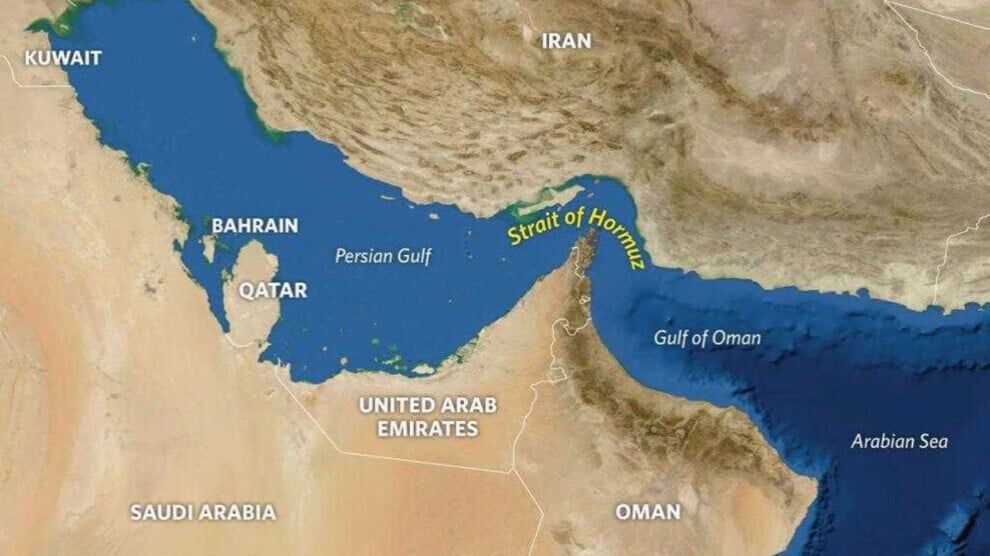
In a further escalation, Iranian authorities have declared the Strait of Hormuz off-limits to international shipping, citing “war conditions” and the risk posed by missile and drone activity.
The Strait of Hormuz is one of the world’s most strategically critical maritime chokepoints. Linking the Persian Gulf to the Gulf of Oman and the Indian Ocean, it facilitates the transit of roughly 20% of the world’s oil supply and a significant portion of global liquefied natural gas (LNG) exports – estimated at between 17 and 21 million barrels of crude oil per day, alongside major LNG shipments from Qatar.
The IRGC has warned global shipping operators against attempting passage. Iranian officials claim that more than 10 oil tankers have been struck after allegedly ignoring repeated warnings from Iranian naval forces. Maritime monitoring agencies report multiple vessels disabled or damaged in the vicinity, with at least a dozen commercial ships confirmed as having sustained damage since hostilities intensified. Insurance risk premiums for vessels operating in the Gulf region have surged sharply.
Oil Prices and Market Impact
The immediate consequence of the closure has been volatility in global energy markets. Oil prices have spiked on fears of prolonged disruption, with benchmark crude futures recording sharp gains in early trading following the announcement.
A sustained closure of the Strait would severely disrupt global energy flows, particularly to major Asian importers such as China, India, Japan, and South Korea. Europe, already navigating fragile energy security conditions, would also face increased costs.
Global equity markets have reacted nervously, with energy stocks rising while broader indices reflect uncertainty over inflationary pressures and supply chain disruptions. Analysts warn that a prolonged standoff could trigger renewed global inflation, given the Strait’s centrality to energy trade.
US President Donald Trump has indicated that the US Navy may begin escorting oil tankers through the Strait to ensure freedom of navigation. He also announced that the US government would provide risk insurance at what he described as a “very reasonable price” to shipping firms operating in the region, in a bid to maintain the “free flow of energy to the world.”
Such a move would significantly heighten the risk of direct naval confrontation in one of the world’s most militarised waterways.
Implications for South Africa
For South Africa, the consequences could be immediate and tangible.
South Africa imports the majority of its crude oil requirements, with a substantial portion historically sourced from Gulf producers. Any sustained disruption in the Strait of Hormuz would likely:
- Increase fuel prices domestically due to higher global oil benchmarks.
- Place additional pressure on inflation, particularly transport and food costs.
- Widen the trade deficit if import costs surge.
- Weaken the rand amid global risk aversion and capital flight from emerging markets.
Higher fuel prices would also directly impact logistics, agriculture, and electricity generation costs, sectors already under strain.
The unfolding situation places global markets on high alert. Should military confrontation deepen and the Strait remain closed for an extended period, the ripple effects could be felt across supply chains, financial systems, and households worldwide – including in South Africa.
As diplomatic efforts appear limited and naval deployments increase, the world watches one of its most critical trade arteries move ever closer to becoming an active conflict zone.