Iran continues to mount a fierce series of retaliatory strikes against America and Israel following attacks on the country and the assassination of the Grand Ayatollah, which also resulted in the deaths of more than 170 children at a preparatory school.
At the time of the attack, the Iranians were engaged in Omani facilitated negotiations with the Americans. Just hours before the war was launched, the Omani foreign Minister – who at the time served as the chief negotiator – said that a deal was in sight when the Americans launched the war to serve Israeli interests.
Donald Trump, the American President, had hoped for a quick war, but that expectation has fallen flat. The Americans – despite claims of having “the world’s strongest army” – have seen their bases in the region destroyed, their “mighty” war carriers retreating, and their superior fighter jets downed. Iran has also restricted the flow of freight through the Strait of Hormuz for American- and Israeli-linked trade, including that of some of their allies.
Trump has been searching for an off-ramp but has been unable to find one. As if the current setbacks were not enough, his administration was seen requesting a 48-hour ceasefire from Iran, which was ultimately rejected. Iran appears to be in a position of strength militarily, economically, and politically.
Israel is also coming under daily missile fire, with Iran seemingly deploying more advanced projectiles that have not only surpassed Israel’s air defenses but are also systematically targeting key military and economic infrastructure.
In one of the latest developments, the Islamic Revolutionary Guard Corps (IRGC) Aerospace Force and Naval Forces launched precision strikes targeting a US Patriot missile defense system in northern Bahrain, among other key locations across the region, as part of the 95th wave of retaliatory operations.
The retaliatory strikes, carried out as part of Operation True Promise 4, utilized the IRGC’s advanced missiles, including Haj Qasem, Kheibar Shekan, and Qadr.
US HIMARS rocket batteries located in Kuwait, together with a US Patriot missile system in northern Bahrain, were among “key targets destroyed in the operation,” the IRGC said.
The forces also managed to target US HIMARS launcher units, a command center and training facility for senior US military personnel and instructors in the United Arab Emirates (UAE).
The facilities of the American technology giant Oracle in the UAE were also targeted, according to the statement.
In a coordinated naval strike, the IRGC said, MSC Ishika – an Israeli commercial vessel operating under a third-party flag – was successfully targeted at the Khalifa Bin Salman Port in Bahrain.
During the operation, multiple locations across the Israeli-occupied territories were also targeted by “heavy strikes”.
American claims of having air superiority over Iran falls flat
The US-Israeli claims of aerial superiority over Iran continue to fall apart. The Iranian forces continue to launch missiles and drones, and its air defence network is proving effective.
American officials admit that an A-10 Warthog warplane was shot down over the Strait of Hormuz by Iranian air defences on Saturday morning. The pilot was reportedly rescued.
It comes as an F-15E was also downed over central Iran.
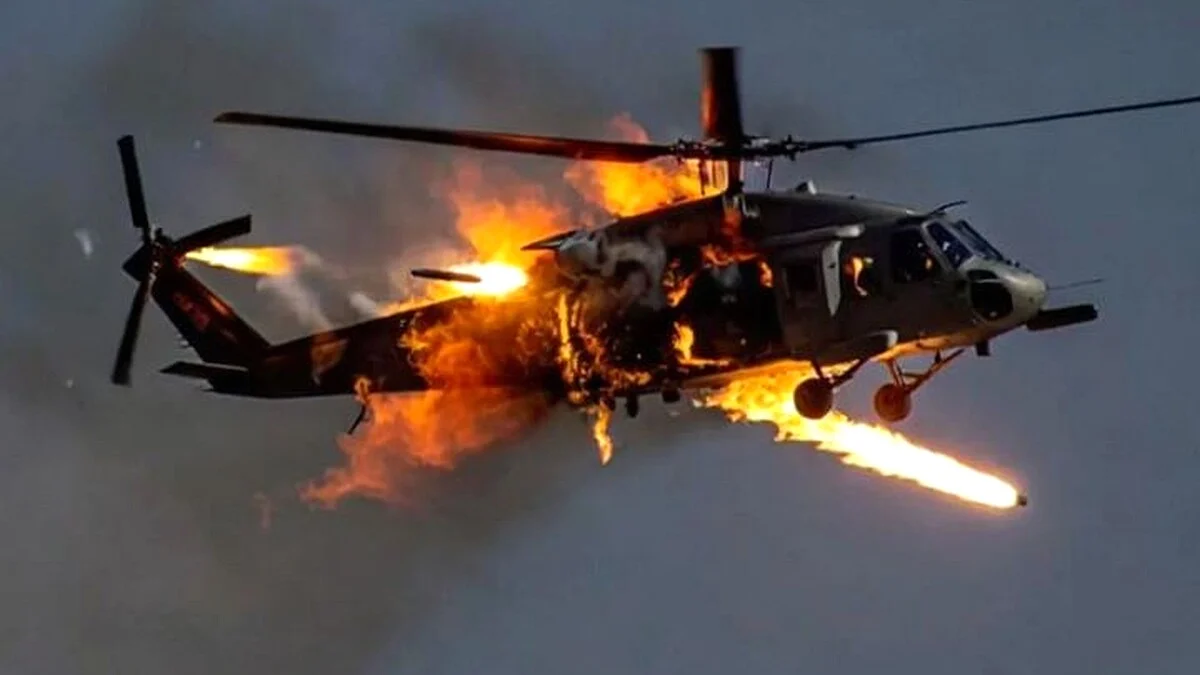
US officials also admitted that rescue helicopters over Iran were targeted. US media reports say two were hit. One of them was forced to land in southern Iraq after. They were searching for the crew of the F-15E.
There is also a report that an F-16CJ had to make an emergency landing.
The Islamic Revolutionary Guard Corps (IRGC) has meanwhile rejected accusations linking it to a reported attack on the US embassy in Riyadh, which took place on March 3.
The IRGC insists that this attack is part of the “Israeli” false flag operations in the region, which are designed to inflame regional tensions and justify further escalation against Iran.
The IRGC’s Public Relations Department condemned the attack and said that, based on “Israel’s” known regional tactics, the operation was carried out by Israeli actors seeking to manipulate the security landscape. The IRGC has stressed that Iran’s armed forces have a clearly defined list of targets focused strictly on US-“Israeli” military assets and related infrastructure, noting that neighbouring countries had already received warnings to prevent escalation.
It warned that West Asia must remain vigilant against provocations from the US and “Israel”, who are attempting to destabilize the region and drag it into a broader war.