
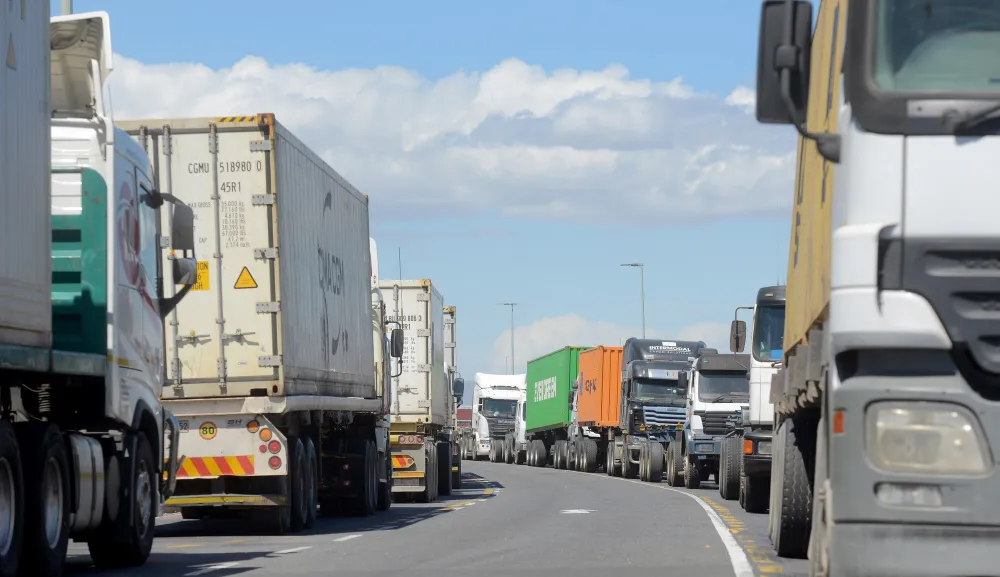
The City of Cape Town has unveiled a draft road freight policy aimed at easing congestion, improving logistics efficiency and ensuring that heavy vehicles contribute more fairly to the upkeep of the city’s road network.
The policy, forming part of the City’s updated Freight Management Strategy, comes amid growing pressure on Cape Town’s transport infrastructure as increasing volumes of goods are shifted from rail onto road. This trend has intensified truck traffic on major routes and around the Port of Cape Town, raising concerns about congestion, safety and road deterioration.
No peak-hour bans, but push for off-peak movement
A key aspect of the policy is its stance on time-of-day freight operations. The City has opted against imposing outright peak-hour bans on trucks, a move that had been widely debated.
Instead, officials are encouraging freight operators to voluntarily shift deliveries to off-peak periods, including late evenings and early mornings. The approach is designed to reduce pressure on commuter-heavy time slots without disrupting supply chains.
The City is also exploring the use of scheduling systems and data-sharing with industry players to better distribute freight movement across the day.
Stronger coordination with the port
Central to the strategy is improved alignment between road freight operations and activities at the Port of Cape Town.
Although the port operates around the clock, much of its truck traffic remains concentrated during daytime hours, contributing to bottlenecks in surrounding areas such as the Foreshore and key freight corridors.
The City plans to work more closely with port authorities and logistics operators to:
- Increase utilisation of after-hours collection and delivery slots
- Improve truck scheduling and reduce queuing
- Introduce or expand digital booking systems
Officials believe that better synchronisation between port operations and road usage could significantly ease congestion without the need for restrictive measures.\
Road-use levy under consideration
Another major proposal is the introduction of a road-use levy for freight operators, based on a “user pays” principle.
Heavy vehicles are known to place disproportionate strain on road infrastructure, accelerating wear and increasing maintenance costs. The City is therefore considering mechanisms to ensure that freight operators contribute more directly to these costs.
While details of the levy are still being developed, it is expected to form part of a broader cost-recovery model aimed at sustaining the city’s transport network over the long term.
The draft policy also signals a wider rethink of how goods move through Cape Town. Measures under consideration include strengthening enforcement against overloaded vehicles, promoting a shift back to rail where possible, and planning for the growth of last-mile delivery services linked to e-commerce.
The City has opened the policy for public comment, calling on industry stakeholders, transport operators and residents to provide input before it is finalised.