By Hasanain Abdullah and Yaseen Bardien
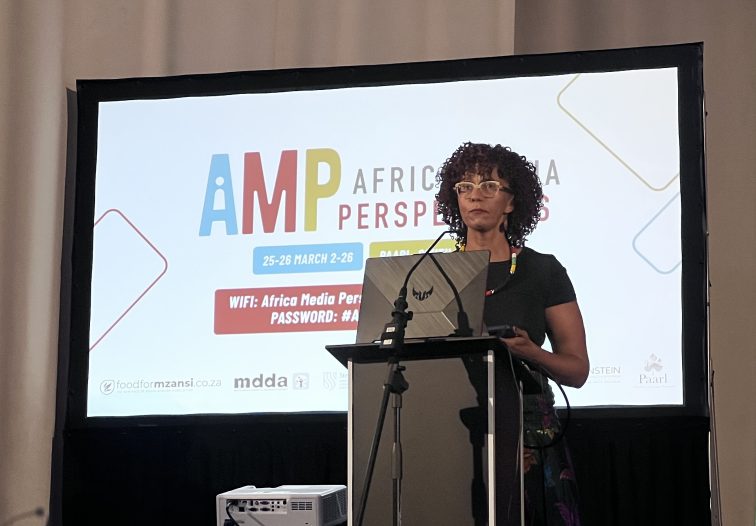
What began as a conversation between the Food For Mzanzi Group, Media Hack, and the Media Development Investment Fund, on creating and sustaining an independent media landscape and grown into a thriving conference now in its 4th year. Africa Media Perspectives creates a platform where key role players in the media industry from South Africa, Africa and from across the world come to engage and discuss the state of industry. The two-day conference was held at the Paarl Town Hall in the Drakenstein Municipality, where moderated discussions, fire side chats and master classes facilitated a dialogue between session moderators, speakers and the audience which made for robust engagement. These comprised of seasoned journalists and media house stakeholders who are shaping the future of journalism and media in South Africa and abroad.
According to conference convener, Ivor Price “the event is a meeting point for media professionals from across Africa, including SADC countries including South Africa, Zimbabwe, Zambia, Kenya, Egypt, Nigeria, with speakers coming from Mexico, USA and Finland.”
This event has relevance, according to Price; “media is changing at a rapid pace and continues to evolve daily, it presents an opportunity as media professionals are discovering new formats that did not exist 5 years ago.”
With advertising revenue increasingly shifting to global digital platforms such as Google and Meta, income for smaller, community-based publications has significantly reduced, leading to shrinking or closing newsrooms, job losses, and leaving communities without vital sources of news. In South Africa, smaller news publications are increasingly struggling to stay afloat, as declining revenue and rising operational costs make sustainability more challenging than ever before.
With the ever-evolving media landscape, where digital media has become the primary platform of news consumption. This has affected how advertisers perceive value and where they invest their money when considering whether to support print or digital publications.
The deliberations at these events tend to be informative, thought-provoking, and this year was no different, Price stated that; “the issue of media sustainability, the impact of artificial intelligence and the application of it in the day-to-day operations was raised”.
The decline has serious implications for local accountability journalism, as fewer journalists on the ground mean less coverage.
Discussions of this nature shares best case studies and business cases to use as a foundation in-order for media houses to survive. The media industry as a business is a complex maze to navigate and conversations of this nature provide a means to network, regroup, strategize and access opportunities for skills development and business opportunity.
The conference through its themes, explored relevant topics affecting the world and the media world. Through shared inputs on these, participants were able to make sense of the phenomenon.
Conflict Reporting in Africa and beyond
The African continent has been experiencing civil wars and the world has seen the outbreak of long-term conflicts that has broken out across the globe. During the discussion theme, “African conflicts through the press lens”, Tesfalem Waldyes, Ethiopian Insider journalist and founder revealed that “reporting on conflict while in the field was challenging due media blackouts”. This included the disengaging of mobile internet networks which made it impossible to compile reports of unfolding atrocities by troops. He further added that “During the time of war, the first casualty is truth, and journalist had to contend with the trauma faced by victims as well as personal ones, while reporting on the war.” We see a similar pattern where, during the Iran-Israel conflict, there has been a suppression on news when Iranian missiles are fallen on site in Israeli residential and key installations. Reflecting on the core values of reputable journalism, he stated “it’s his duty to report on facts and verify information”.
Furthermore, he reflected on the ever-changing media environment, “It’s easier to be reporting in conflict war zones that to run a media house in the 21st century”. This is a growing phenomenon where small independent media businesses must contend and compete with big media companies who have access to big spending budgets.
Journalists have become casualties while reporting in the field, and he raised the point that there is a dire need for “support to journalists reporting in conflict areas in terms of logistical support, in the event of them needing to flee in order to secure their safety.”
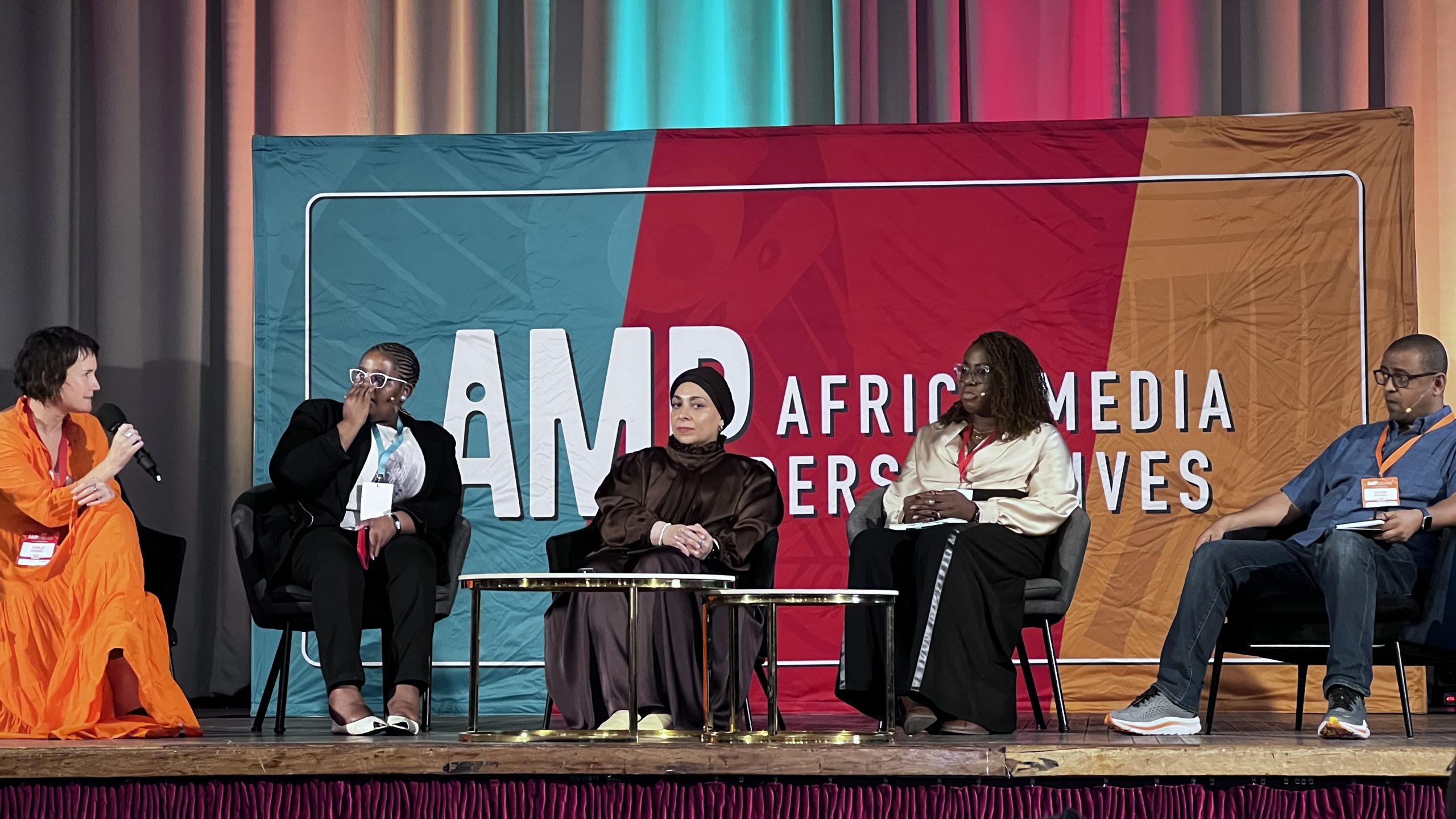
Rebranding journalism – Thriving under pressure in African Media
This theme afforded media leaders a platform to share how newsrooms were rebranding journalism and through innovative means to inform, engage and build trust in a changing world.
Sanja Gohre, a seasoned media professional and host of the African Optimist Podcast, was the session moderator for the session.
Gohre said “journalists don’t know how to brand themselves”, this was a key requirement and essential as part of their growth path.
She further added, “this event was a rare opportunity for media professionals to meet, share and grow.” Most of the time media professionals find themselves in the field chasing up a story and meeting deadlines; having the people in one room is rare and much required.
Gohre highlighted a valid point raised by “Gadija Patel, who stated “that social media influencers fall short in terms of reporting on the news and fulfilling their roles as journalists, due to them lacking in the media knowledge at a foundation level.” Social media influencers are good at creating awareness for brands but fall short when reporting objectively on the facts.
Podcasting as a business
The session, “Podcasting as a business – Turning voices into revenue” explored the emergence of podcast of a sustainable revenue generator. Podcasting is fast becoming a popular means of content and current affairs consumption, with shows like SMWX hosted by Dr. Sipho Walsh setting a high bar for what a podcast show on current affairs should look like.
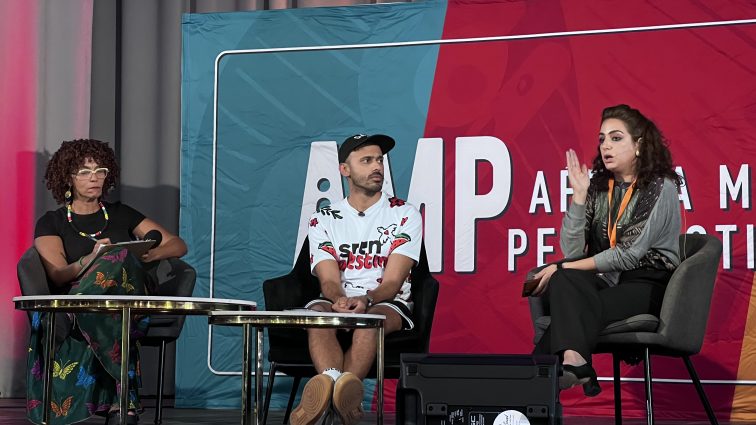
Roland Perold – CEO, Volume Podcasts started his media journey at the height of the Covid-19 outbreak.
His big break came when he was commissioned by Access to produce series on the Rohinga Massacre.
Patricia Tembo, from Food for Mzanzi, stated that by “by raising the flag of key problems faced by farming through storytelling” a deep connection with an audience is forged through understanding. Sharing stories that matter to their audience continues to contribute to their growth path.
Podcasting holds value to bring the challenges faced by farmers to the fore. This is where conversations can be hosted. This is where a direct channel is created between the audience and stakeholders that are profiled.
Selly Thiam, manages AQ Studios in Kenya, he said that “podcasting afforded him an opportunity to engage with an international audience” this is due to the audience who find themselves in the diaspora of the audience. The medium levelled the “playing field” and this affords media professionals an equal opportunity to access an international audience and to compete with established media houses. The entry point to access has minimal or no barriers; all that is required is the in-house skills and podcast studios that are accessible.
Quan Dambuza Pondaland Times editor from Bizana, Eastern Cape, “their audience consume the print edition where 5000 copies are printed, while their website analytics tracked 1 million impressions visit their website.” Media houses have had to diversify in the platforms that they use. Dambuza who is quite in tuned with the needs of his audience “stated that their publication is in English, as this is the preferred language of consumption’.
Further “digital content in the form of their weekly e-newsletter to 12000 subscribers has assisted the newspaper with its retention”. In addition, AI has been used as part of a productive workflow.
What’s next for community journalism
The panel titled ‘What’s next for community journalism?’, was facilitated by Harlan Cloete, founder of Radio KC, South Africa. The four panellists comprised of Khutso Tsikane, Ben Burger, Anetta Mangxaba and Ananias Ndlovu. This theme explored how community media houses have to rely on the trust built with their audience, and diversify their product mix by including a digital media consumption of their publication.
Community journalism focuses on local news and stories that affect the lives of residents, filling gaps that mainstream media may miss.
At the centre of this conversation is whether community media can be financially sustainable without compromising editorial independence. The discussion explored how local journalism can adapt and survive through new business models, digital innovation, and building community trust.
Khutso Tsikane, Print and Digital Media Manager at the Development and Diversity Agency (MDDA), noted that community media can learn from social entrepreneurship models, which combine mission-driven goals with diversified revenue streams. Sustainable media models may include hosting events, conducting paid research and other commercial activities. This represents a shift away from traditional reliance on advertising towards a more diversified approach to sustainability, transforming news outlets into multifunctional entities embedded within their communities.
Furthermore, she added that trust is built when media businesses are transparent about their funding sources. While these strategies can open new pathways to financial sustainability, they also present new challenges such as the boundary between editorial and commercial interests.
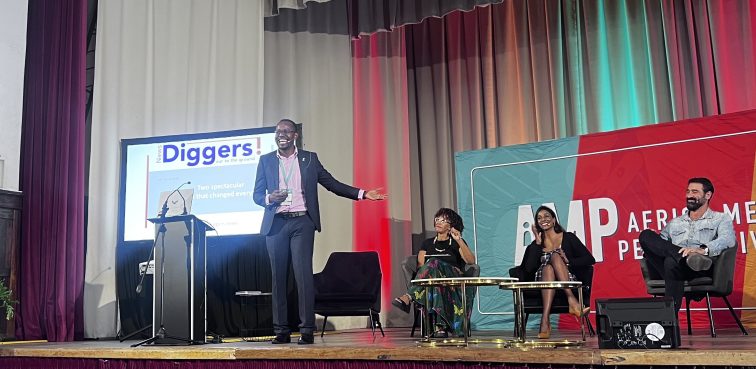 In parts of South Africa, especially in poorer or rural communities, many lack internet access and data is expensive. While print is in decline, it still plays an important role. Ben Burger, Executive Director of the Forum of Community Journalists and Anetta Mangxaba, publisher of Dizindaba Media, both noted that for this reason, print remains essential, with audiences relying on print publications as their primary source of news.
‘For Dizindaba, print is not dying,’ Mangxaba said. ‘We service people who can’t afford R10 data.’
Digital platforms can compliment print, filling gaps where distribution is limited but they do not replace it entirely. This demonstrates how economic inequality, as much as technology, shapes the way media is consumed. Burger also highlighted that lessons can be learned from media businesses at the micro level within their communities.
Ananias Ndlovu, journalist, entrepreneur and author of The Real Death of Community Media stated that communities and their relation with local government have taken strain. If a journalist is critical of local government, support in terms of funding will be non-existent. ‘As community holders, we are being reduced to beggars’, he said.
Ndlovu’s remarks drew attention to the complex relationship between community media and local government. When coverage is critical of local authorities, this may affect their support, creating a form of soft censorship.
Altogether, these perspectives show how difficult it is for media houses to navigate the current journalistic landscape. Speaking to Muslim Views, Harlan Cloete emphasised the undervalued role of community journalists and the need for mutual accountability between media and local government. ‘The two need to hold each other accountable. We need to spend more time trying to narrow the gap between local government and community media.’
Hybrid approaches offer a way forward, but long-term sustainability remains uncertain as the industry faces new challenges, including AI technologies.
Ads and Subs: A Brief History of the New York Times
Dao Nguyen, Senior Vice President and Head of Digital Advertising Products from the New York Times shared her insights and best business case during this theme which explored how publications in a crisis could generate a revenue.
Dao stated that “a strong media ecosystem is required to stimulate a thriving media industry.” This was a strong point that was raised, which AMP could resonate with; the New York Times engaged with regular media skills development interventions which added value to the media industry in the USA by upskilling university graduates and under skilled media professionals.
Furthermore, she adds that “investigative journalism should be supported through training.” There is a need to expose social issues through this form of investigation, and this is where Dao’s organisation’s play a role in skilling up media professionals in this regard.
In a separate business division, New York Times produces branded content, this includes creating content for brands so that they may create a relationship with their intended audience. Dao said that “breaking news contributed to their organisation’s high engagement statistics when it came to search engine marketing”. This informs us that modern day journalism plays in the realm of the attention economy, where a considerable focus is places of search marketing.
The Rise of (the risks) of Africa’s news creators
This panel focused on how Africa’s digital creators are rewriting the rules of current news and politics. They are reaching new audiences, where traditional media struggles to break new ground. The panelists who participated in this panel were young media professionals, filled with innovative ideas and who were not afraid to roll up their sleeves and do the hard work. Fathiya Nur comes from a traditional media career background, and she is adjusting to the new form of how her audience consumes media. As the commissioning editor at Faces of Africa in Kenya, Nur uses storytelling to reach her audience.
Nicola Bergsteedt, the founder of NB News Wrap shared insights into how she ran her online news site. The content she posts includes daily wraps, which includes the top10 local and international stories. She stated that “New Wrap’s content was tailor-made for a social media first and for mobile smartphone viewing” . What was refreshing to find was the content that was posted focused on the good news, where uplifting stories were published to cheer up the growing audience. Bergsteedt said that “fact checking of information was part of the journalist code” that she abided by. Factual reporting on the news was an essential staple of credible news reporting. She further added that, “there is a need for fast, digestible content”. She outlined a future ambition, which included, “ a need to go to schools and to encourage learners to engage with critical thinking and to conduct election training to them”. In a society where AI i is automating basic word processing tasks among a myriad of others, there seems to be under stimulation of cognitive processes when it comes to thinking and the cognitive processes.
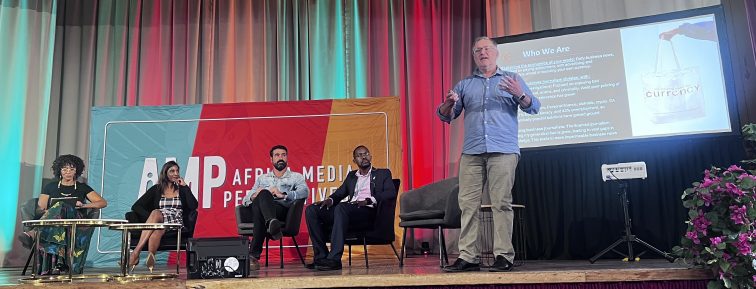
Another panellist who made a valuable contribution was Stephen Horn, the driving force behind a current news political satire programme, “Politically Aweh”. He stated, “the platforms explores the chaos and reality of living in South Africa through factual content.”
David I. Adeleke, Founder of Communiqué in Nigeria argued that he catered for a niche audience who appreciated their “long form content, which was of a result of countless hours of work, this requires a lot of time, but is what builds trust.” Furthermore he added that “revenues strategies included hosting of in-person events as well as conducting research explored direct-audience monetisation.”
In conclusion, the future of journalism’s foundation has been shaken to its core. Amidst the quantum leap in technology that has affected every aspect life as we know it. By leveraging collective resilience, strategic diversification and an unwavering commitment to foundational principals, journalism will continue to thrive.
The Africa Media Perspective (AMP) conference serves to build a cohesive and thriving media community building a “media ecosystem grid” through collaboration. Through economic innovation and systems that is implemented with failsafe in place to navigate technological mutations and political volatility.
For more information, visit:
https://www.africamediaperspectives.com/
https://pondolandtimes.co.za/
https://sizwempofuwalsh.com/smwx
https://www.seen.tv/
https://nbnews.co.za/
https://www.politicallyaweh.co.za/
This post was first published in the Muslim Views by Hassanain Abdullah who writes for the publication on media and tech.