Do you really know what your medication does — and what could happen if you stop taking it?
For millions of people living with chronic conditions, taking medication becomes part of everyday life. But simply having a prescription isn’t enough. Understanding your disease, your medication, your dosage, possible side effects and the importance of treatment adherence can play a crucial role in managing your long-term health.
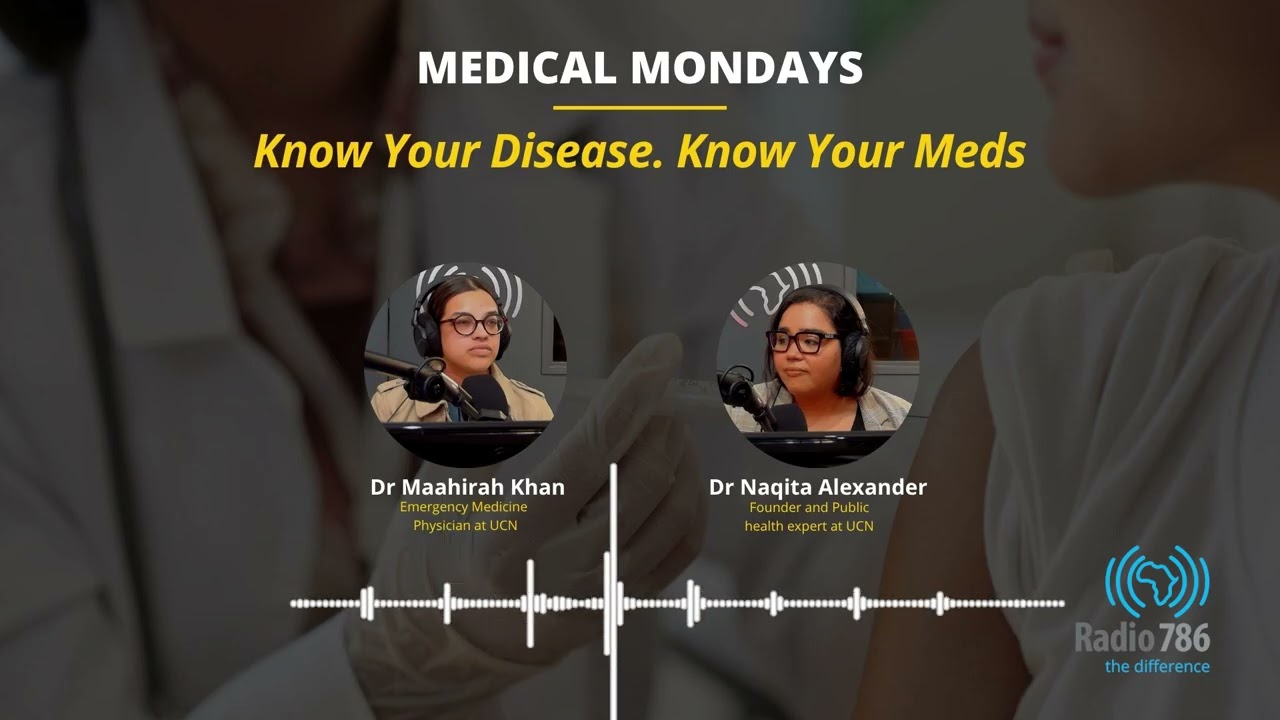
In this episode of Medical Mondays, we explore why patients sometimes stop taking their medication when they feel better, what happens when chronic disease treatment is interrupted, and how patients can become more informed and empowered partners in their own healthcare.
Joining us are Dr Naqita Alexander, Founder and Public Health Expert at Urgent Care Network, and Dr Maahirah Khan, Emergency Medicine Physician at UCN.
We discuss medication adherence, chronic disease management, polypharmacy, medication side effects, drug interactions and knowing your numbers, including blood pressure, HbA1c, cholesterol and viral load.
In This Episode:
What does it really mean to know your disease and know your medication?
Why do patients struggle with medication adherence?
Why feeling healthy doesn’t necessarily mean your condition is under control
Understanding hypertension and why it is often called the silent killer
Why blood pressure medication manages the condition but doesn’t necessarily cure it
What can happen when treatment for diabetes, HIV, hypertension and high cholesterol is interrupted?
Understanding medication adherence and why consistency matters
Managing multiple medications and understanding polypharmacy
What should you do if your medication causes side effects?
When can a medication side effect become a medical emergency?
Important questions to ask when receiving a new prescription
Understanding medication and food interactions
How other medicines and drinks can affect your medication
Why you should know your numbers
Understanding blood pressure, HbA1c, cholesterol and viral load
Simple strategies to remember your medication
Using alarms, pill organisers and daily routines to improve adherence
How family support can help with chronic disease management
Taking greater ownership of your long-term health
Why Knowing Your Medication Matters
“I feel fine, so I don’t need my medication today.”
It’s a common way of thinking, but with many chronic conditions, symptoms aren’t always a reliable indication of what’s happening inside the body. Stopping or repeatedly missing medication without medical guidance can have serious consequences.
The conversation also looks at how healthcare professionals and patients can work together to make medication management safer, simpler and more effective.
The goal is to help patients ask better questions, understand their treatment and take an active role in managing their health.
Guests:
Dr Naqita Alexander — Founder & Public Health Expert, Urgent Care Network
Dr Maahirah Khan — Emergency Medicine Physician, UCN
⚠️ Disclaimer: This programme is for general educational and informational purposes and does not replace personalised medical advice, diagnosis or treatment. Do not stop, change or skip prescribed medication without discussing it with your doctor, pharmacist or other qualified healthcare professional.