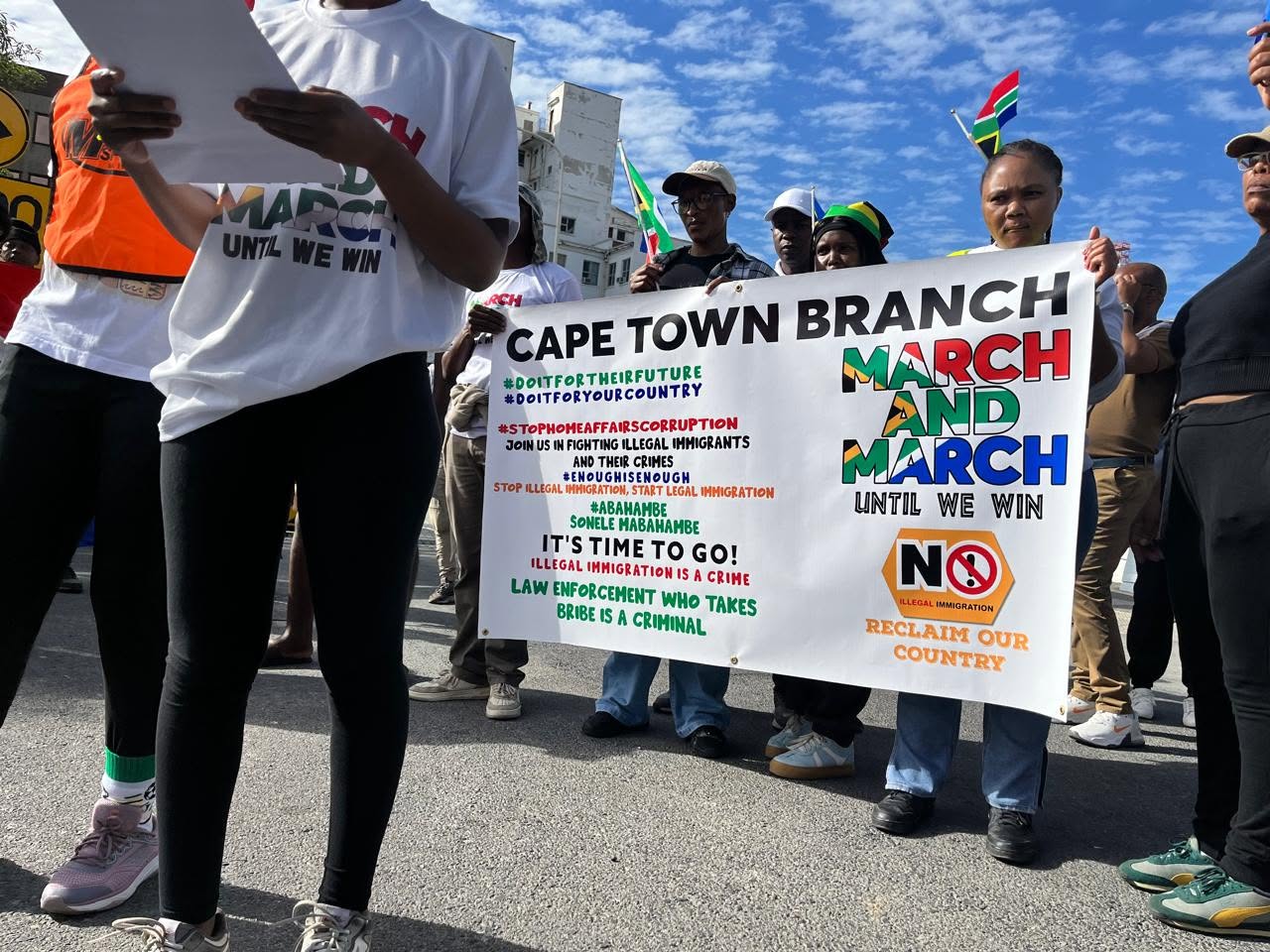
Cape Town, South Africa – Members of the anti-immigrant group March and March have submitted a memorandum of demands to Parliament, calling for stricter immigration controls and stronger action against corruption within the Department of Home Affairs.
The group claims that South Africa is being overwhelmed by foreign nationals and argues that the country’s housing shortages, strained public infrastructure, limited essential services, and unemployment challenges are being exacerbated by migration. Their concerns form part of a growing public debate around immigration management, border security, and economic opportunities in South Africa.
March and March has specifically called on the Department of Home Affairs to intensify efforts against corruption, alleging that fraudulent permits and immigration documents are being unlawfully issued to foreign nationals. The group is demanding stricter enforcement of immigration laws and the deportation of undocumented migrants where legally applicable.
The concerns raised by the organisation come as government continues efforts to address corruption within Home Affairs. Last month, Minister of Home Affairs Leon Schreiber confirmed that 63 corrupt officials had been dismissed as part of an ongoing campaign to root out fraud and strengthen the integrity of the department.
While anti-immigrant sentiment has gained visibility through small protest groups in several parts of the country, many South Africans have expressed broader concerns about the efficiency of immigration administration rather than migration itself. Civil society organisations, business groups, and community leaders have repeatedly called on government to improve border management, speed up the processing of visas and asylum applications, and ensure that immigration systems function transparently and lawfully.
The debate has also highlighted questions around foreign ownership of property and economic assets. Critics of anti-migrant campaigns argue that public attention is often directed at African migrants while overlooking the role played by multinational corporations and wealthy foreign investors who legally acquire South African property, businesses, and natural resources. Analysts note that concerns around economic exclusion and inequality are often more complex than immigration alone and are closely linked to broader structural challenges facing the country’s economy.
South Africa remains bound by both its Constitution and international obligations to protect the human rights of all individuals within its borders, including the rights of asylum seekers, refugees, and migrants. The Constitution guarantees dignity, equality before the law, and fundamental rights regardless of nationality.
Meanwhile, Justice and Constitutional Development Minister Mmamoloko Kubayi has reiterated government’s position regarding the treatment of migrants and asylum seekers amid recent anti-migrant protests.
Speaking during an inter-ministerial media briefing, Kubayi stated that South Africa is not legally obligated to establish refugee camps and currently does not operate any such facilities. Her remarks came as authorities continue to manage the aftermath of demonstrations that have affected several communities.
In recent weeks, some foreign nationals have sought temporary shelter in parks, community halls, and other public facilities, while others have camped outside police stations and Home Affairs offices amid concerns for their safety.
Kubayi said individuals who are legally residing in South Africa are encouraged to reintegrate into the communities where they have been living and assured that they would receive protection from law enforcement agencies, just like South African citizens. Alternatively, those wishing to return to their countries of origin may choose voluntary repatriation or deportation processes where applicable.
The ongoing debate reflects the complex balance South Africa faces between addressing legitimate concerns around border management, corruption, public service delivery, and unemployment, while upholding constitutional rights and international commitments to protect vulnerable people seeking refuge and opportunities within its borders.
As discussions continue, immigration policy, Home Affairs reform, and economic inclusion remain key issues shaping South Africa’s national conversation on migration and social cohesion.